
projects | Viabizzuno progettiamo la luce
discover all the Viabizzuno designs and projects in collaboration with the world’s leading architects and designers.


 en
en
chiesa santa maría josefa
place:bilbao, spagna
project:imb arquitectos (gloria iriarte campo, eduardo múgica, agustín de la brena torres)
buyer:vescovado di bilbao
lighting project:imb arquitectos, Viabizzuno
foreman:imb arquitectos
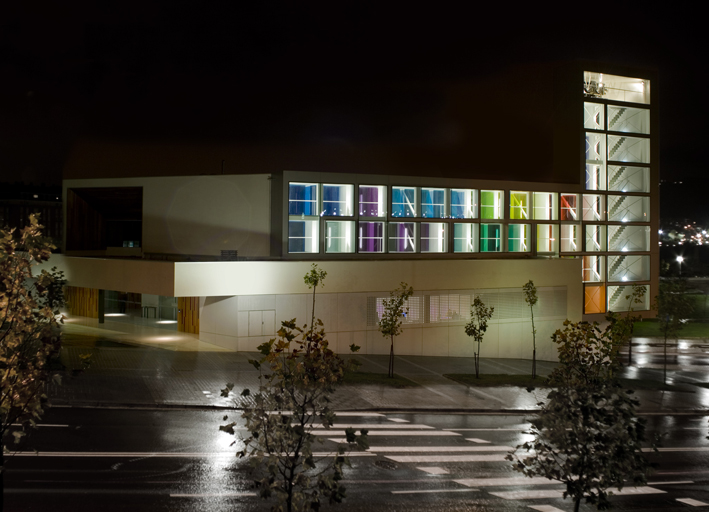
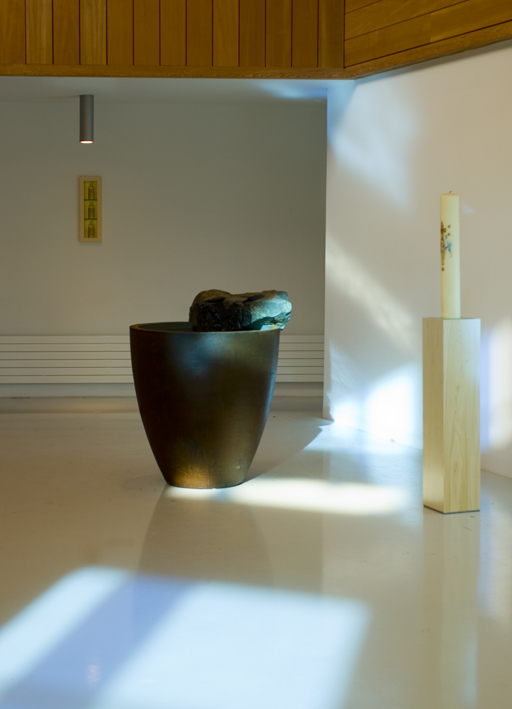
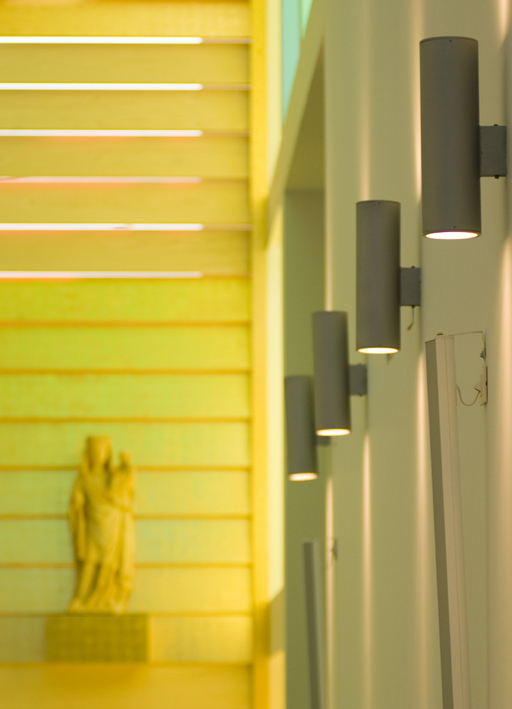
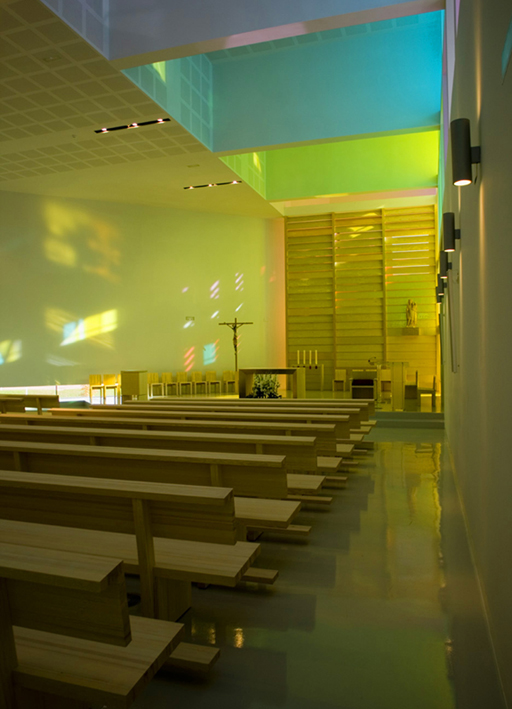
a solid architectural volume, strict and strong, but also harmonious that finds identity in the city's skyline, like churches used to find in ancient urban settlements: churches that were places for gathering, to belong to, to identify in, points of references. this is the way this volume approaches to take possession of city's space. the project starts from an accurate urban-territorial analyses, an evolving map is transformed in a volume absolutely coherent with its distribution plan, and therefore highly evocative and communicative. the client desired organization and formalization of the areas dedicated to religion, with representation's connotations, expression and symbolism of religious practices. these aspects turned out to be in tight relation with shape's conditions, topography , building plot orientation and its connection with the surrounding urban context. designing attentions were concentrated towards a vertex generated by a diagonal road and a park lane that together form land's most visible point. a point that can be seen from any surrounding perspective view. project's areas merges towards this point. it is positioned according the temple's own position, in which the entrance is placed west and the altar placed on far east, coherent with christian symbolism. from the perspective views of the avenue of miribilla and the diagonal road, this peak gives the possibility in catching sight of the new temple amongst the outline of what was built before. it takes the most from the descending topography and from the significant proportions of the building that immediately is seen in the urban context. the customer was asking for a necessary and required austerity in line with the construction that was there to be built, therefore the efforts of imb arquitectos were concentrated on distinguishing the building throughout an element able to express, symbolize and represent religious services and to organize, articulate and characterize the interior formal and environmental peculiarities. this unusual element is a glass prism, held up by an exile metallic grid that is inserted in the main volumes of the edifice. it therefore creates a slot around which the interiors are arranged. this element is recognized as a real catalyst of light. it is an architectural volume capable of making the mystical dimension of ecclesiastical space live with the pathos that a church needs. the study of natural light becomes the project's guide. a study that is an accurate research of a correct artificial light able to connect to design's concept and making it become visible after sunset. at that time the light will come out of the volume invading outer space. the plot of this prism, built with glass sheets, creates a three-dimensional mosaic. made of different volumes and textures, the prism captures natural light from south and spreads it in all inside directions. the temple's perimeter receives horizontal light, lighst that hugs the roof, from the top of the wall on right hand side, directing toward south. in contrast, the north east façade lets light in from the floor, throughout a horizontal slit. the remaining spaces (the parish offices at the bottom floor and the parish rooms in the basement) receive zenithal light from a two floor high longitudinal patio. in contrast, indoors artificial light diffusely illuminates the prism, showing temple's image to the outside, and in particular, towards the avenue of miribilla. the volume that during the day issues from the ground, during night lifts up even more thanks to the light effect of the prism. the model of the volumes' disposition, that clings on to this lighting prism, represents a three-dimensional rendering of traditional stained-glass window. it is featured by enveloping smooth and simply panels, easy to fabricate and economic, that respect all uses and surfaces on which they're applied. two significant bodies are untied round the longitudinal glass prism. the higher one, modeled by a structure of big lights, contains the perimeter of the main temple. the second one, created by a passageway, a sort of lane, a structure made of 7 m of light, wraps the inside, outlining the nature of the ground. this volume contains the rest of the service plan, distributed on two floors (level 0 and level -1) that adapt themselves to the land's topography. the temple's group: the daily functions chapel, the sacristy and the confessional are distributes in order to make use of the large transparency and continuity, even when the wrapping floors, the heights, the textures and each ones' illumination carry different specific features. the sacristy's position, in relationship with the church and the daily functions chapel, makes possible and easy processions inside the temple. the font, lit by flows of natural light that reach it more times a day, is placed at the temple's entrance, next to the welcome vestibule. on the rest of the ground floor we can find the parish offices and the related rooms. parish outbuildings, gathered together on the -1 floor (height +63m), adapt themselves to the structural model. they surround the100 people's parish living room, a large foyer long the perimeter that separates the space of the building thanks to the longitudinal patio and the two small patios that catch air and light. space distribution, architectural plan, the choice of the material, the development of the paths and the study of the area's view points are part of the elements that emphasize the importance of light, both natural and artificial, for imb office. sensitivity with which light material has been used in this building makes it evocative, mystical, but as the same time frugal and austere, a new architectural symbol for the city of bilbao.
scroll


 Page loaded in: 0.094 - Powered by Simplit CMS