
projects | Viabizzuno progettiamo la luce
discover all the Viabizzuno designs and projects in collaboration with the world’s leading architects and designers.


 en
en
the mantua and reggio emilia gazettes
place:mantova e reggio emilia
project:vittorio longheu
buyer:la gazzetta
lighting project:marionanni
for me, looking at everyday life from a corner has now become a way of interpreting the world. staying on the sidelines very often reveals some realities, the privilege of few, it becomes primarily an opportunity to delve deeper and reflect, it clarifies thoughts, and with them the way of looking at things around us. it reveals unexpected relationships. vittorio longheu
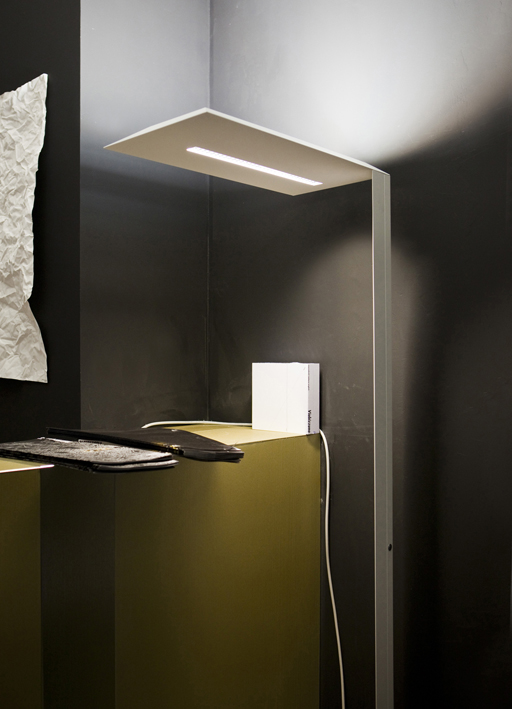
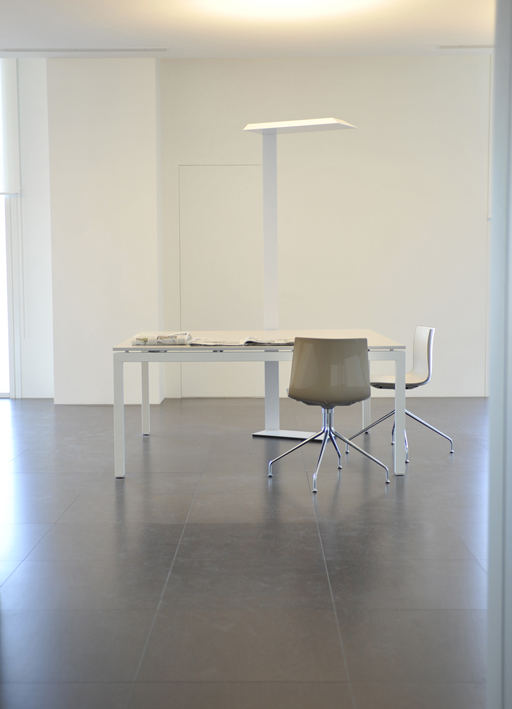
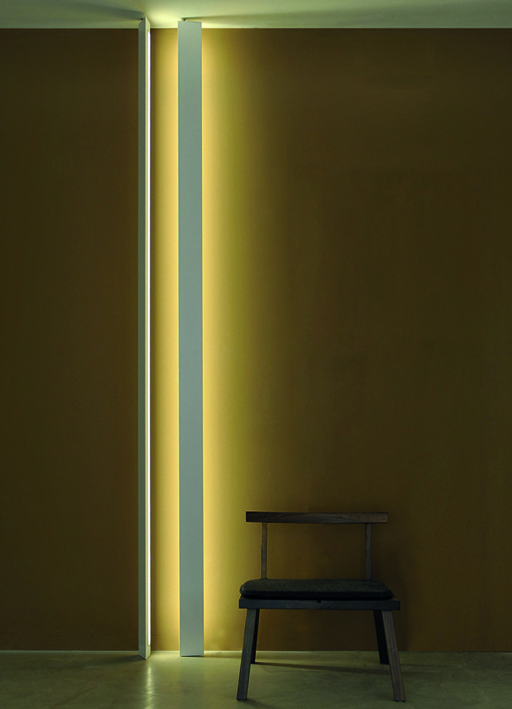
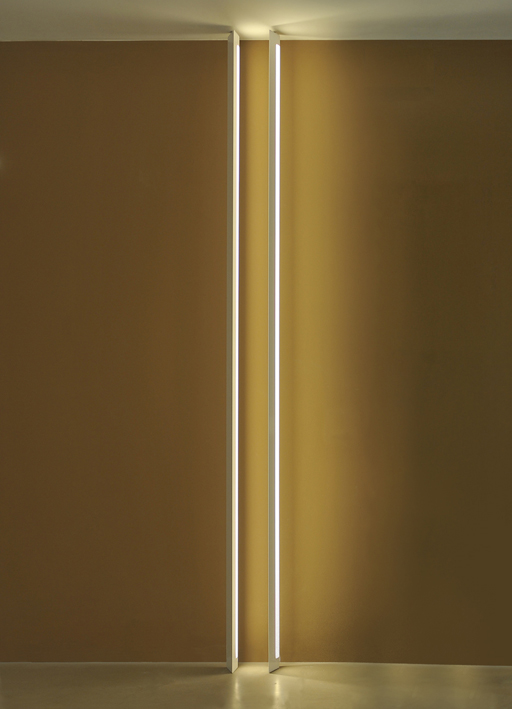
the feature of this project is angularity, the 16.64. lamp (sistema 16.64), designed as lighting for the nights spent in the office by journalists at the mantua gazette and later the reggio emilia gazette and perhaps, in the future, other papers too. the shape it presents is simultaneously thin and light, but also balanced, stable and asymmetric. the many games derived from the interplay of these qualities find form in this simple, almost quiescent lamp, a way to interpret the liveliness of the newspaper from a discreet but still bright corner.
the two projects, the new home of the gazzetta di mantova with the construction of the paper's new headquarters and the interior fit-out for the gazzetta di reggio emilia in an existing building, were therefore an opportunity for the design of this new lamp (which later became a new lighting system).
gazzetta di mantova.
this project is a reflection on the meaning of building in the contemporary city, viewing the design process as civic action akin to research, rather than invention.
In this context, invention may be understood as discovery and the discovery site is the city and its history. so the project becomes a learning process and the object of the study is those parts or fragments of the city, as in this case, that again reveal one of their narrative freedoms; they are places waiting for completion.
located to the south of, or opposite, the monumental complex of the ducal palace, the area was historically one of the entrance gates to the walled city, i.e. the boundary between the city and the lakes and therefore between the architecture and the landscape. located in the vicinity of the isola del té, however, where the gonzagas built their home, this area, together with that of palazzo té, represents an interesting opportunity not only to redesign a new approach to the city from the south but also to conceive an alternative focus to that of the ducal palace and the layout of public spaces of piazza sordello, piazza broletto and piazza erbe, with a great public space devoted to culture, art, sport and leisure activities, achieved through the design a park.
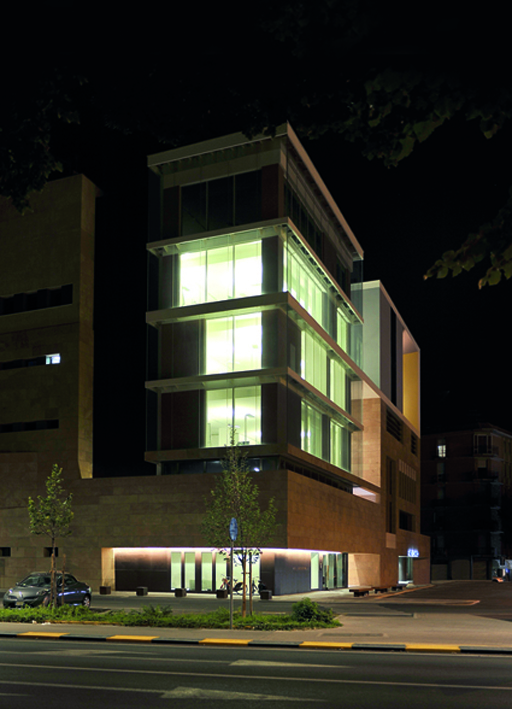
the project could be defined as architecture made of buildings. the glass box, on its west elevation, an angular feature sited on the route leading to porta cerese, is a 'symbolic' space, a place that announces itself from afar but also a clear urban symbol you meet on entering the city.
the colourful loggia, also on the west elevation, facing palazzo té, follows the geometry of the roman town plan, on which the layout of much of the po valley landscape is based and its orientation is testimony that this project belongs not only to the city but also to this landscape.
the stone podium defines its relationship to the site and to the ground, two stories high but also four and with recesses to accommodate the arcades and the gallery, features necessary to creating the public space. the podium changes direction on the north elevation, slanting to follow the line of the ancient city wall, demolished in the early twentieth century and disclosing, through a long epistyle, a piazza formed between the office complex and the residential portion.
the building project is 39m long, 27m wide and 24m high, corresponding to six floors above ground. two floors of underground parking are also provided. the building features a four storey high gallery, which emphasises the difference between the right and left sides of the façade. the first consists of a block completely covered in stone, pierced with large openings and featuring a double-height loggia; the second, by contrast, has a fully glazed façade. the two sections are connected by the two storey high podium, which gives continuity to the façades. where it fronts onto the public spaces, part of the podium is cut away to create a portico, connecting with the interior spaces and protecting them.
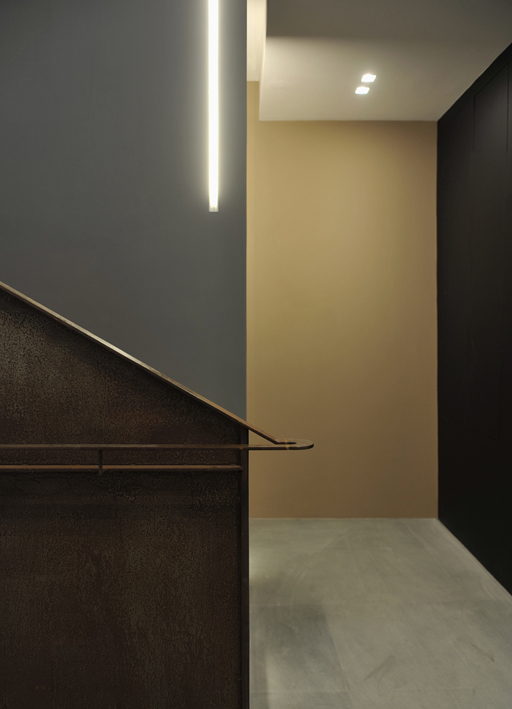
the left hand block houses the new headquarters of the mantua newspaper, the gazzetta di mantova, the oldest newspaper in italy, founded in the city in 1664. designed on flexible principles, the plan provides a central core with stairwell and lifts, directly linking the offices to the first basement, where the car park is situated. the storerooms and toilets are located in this circulation block, behind the north façade. between the ground and fifth floors, definition of the circulation layout is left to the arrangement of fixtures and furniture. the only designed feature is the meeting room, located on the first floor, with a small circulation lobby. a glass box highlights the location of the editorial office that, when operating at night, lights up the entrance to the city like a lantern.
the design of workstation lighting was achieved with a scheme using piantana 16.64 fittings, in order to guarantee the required lighting standards with a diffused style of lighting.
from the city, looking at the six glazed storeys of the editorial offices from below, the effect aimed for was lighting that emphasised the volume of light rather than the light source.
the illuminated ceiling, therefore, is inevitably the most significant element of the design.

.JPG)

scroll


 Page loaded in: 3.011 - Powered by Simplit CMS