
projects | Viabizzuno progettiamo la luce
discover all the Viabizzuno designs and projects in collaboration with the world’s leading architects and designers.


 en
en
piazza trisi chiesa del carmine, lugo
place:lugo di romagna
buyer:comune di lugo, sindaco del comune di lugo raffaele cortesi
lighting project:marionanni
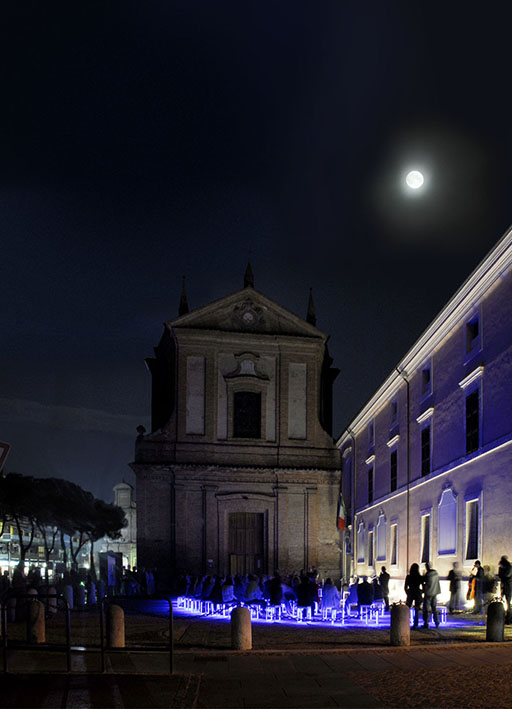
in lugo on 25 september 2007 the first act of an ambitious production took centre stage, the restoration of lugo’s historic centre; squares, streets and public spaces are being enhanced from both the historical and architectural point of view. the aim is to restore the city to its citizens, to bring both locals and tourists to discover lugo and get to know it better, so that people can return to living city life with its tempos and customs, chatter in the square, the market and the shows.
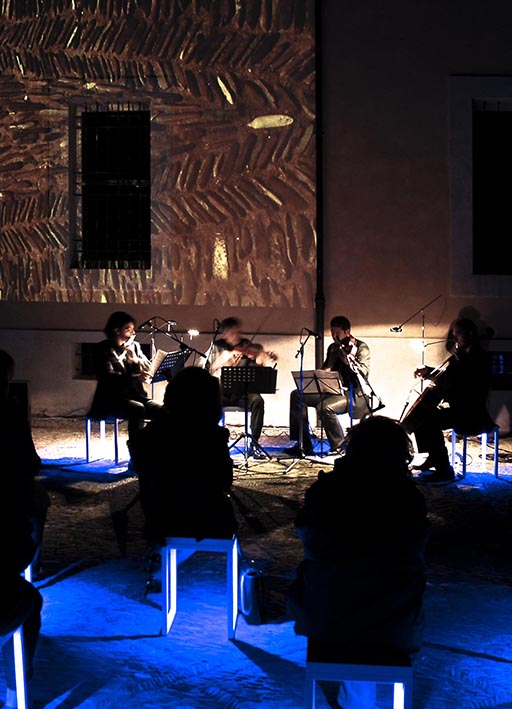
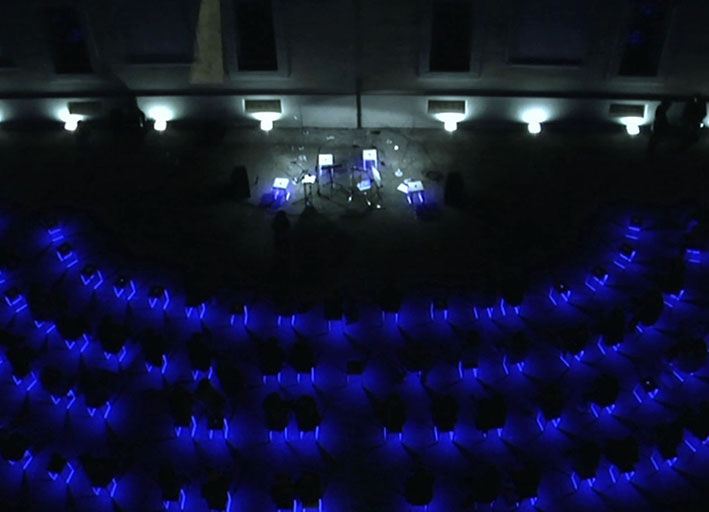
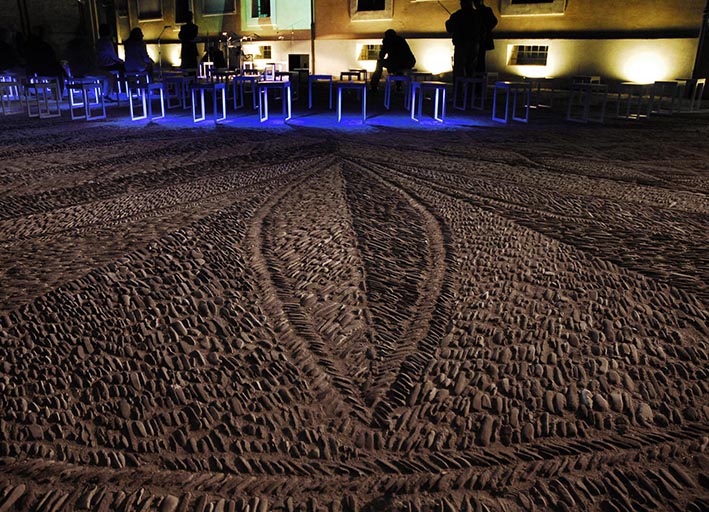
sociability is a forgotten value, too often suppressed; lugo is proposing to make the most of itself to recapture the proper way of life in a city community. the first step was conservation work to restore piazza trisi, site of the church of the carmine designed by the architect francesco petrocchi, which stands on the remains of the ancient church of the carmelite fathers, of which the entrance doorway on the left side of the church with renaissance archivolt and mouldings in red terracotta, the polygonal apse and the side walls up to a height of about four metres are all still visible. the place is important too for its cherished pipe-organ, the last significant project undertaken inside the church, which was installed in 1797 and built by the famous organ maker of the time gaetano callido, who in this very carmine church in lugo, created the largest instrument in the whole region. as a child, gioacchino rossini used to practise on this organ. the opening ceremony for the completed restoration of the forecourt could only be a concert, a blend of music and light to show off what is more of a paved area than a piazza, a veritable carpet laid on city soil, a carpet of stone, materially tough but with a soft appearance such is the way it permeates the ground; its curves are voluptuous, guiding one’s view and defining the communal area of the piazza. the image of this ground is strong and intense, both from a tactile point of view (when walking on it one is suddenly aware of a sensation underfoot) and from a visual perspective. the surface is unbroken but not flat, all of a piece but not homogeneous, perfect for illumination. in this connection mario nanni, who was commissioned by the city to take care of lugo’s artistic direction, decided to enhance the surface of the piazza and to draw spectators’ attention to the concert at the same time, in one single step, illuminating the surface of the piazza suffusely and precisely but subtly too. the carpet of stone, as a horizontal surface, is lit with an expanse of white Viabizzuno stools that, with a led under each seat, celebrate the restoration of the piazza; the façades on the other hand are illuminated with images of light, from lugo, that move, dim and change, on walls that become the vertical surfaces of the piazza. the stools light up as people sit on them a symphony of light in a symphony of music. there is a tempo in them coming on; it is the tempo of city life, the same tempo one detects in the images lighting the façades of the piazza that represents the re-awakening of the city, the first beat in the tempo of the day. sound, light and material were the three dimensions that enveloped the spectator throughout the concert, until the finish when, a little at a time, each stool turned out the light on its patch of carpet.
without its citizens, the piazza slowly surrendered to the darkness, pending another new re-awakening like the one revealed by the images of light on the façades of the piazza, the re-awakening of a city that knows how to heed, observe and love its own spaces, a city that has learnt to be never the same, just like light. without its citizens, the piazza slowly surrendered to the darkness, pending another new re-awakening like the one revealed by the images of lig aht on the façades of the piazza, the re-awakening of a city that knows how to heed, observe and love its own spaces, a city that has learnt to be never the same, just like light.
scroll


 Page loaded in: 0.078 - Powered by Simplit CMS