
projects | Viabizzuno progettiamo la luce
discover all the Viabizzuno designs and projects in collaboration with the world’s leading architects and designers.


 en
en
a new urban park along the banks of the moskva river
place:mosca, russia
project:wowhaus architects. dmitry likin, oleg shapiro, mikhail kozlov
buyer:muzeon, mosgorpark, moscow department of culture
photos:marika volkova
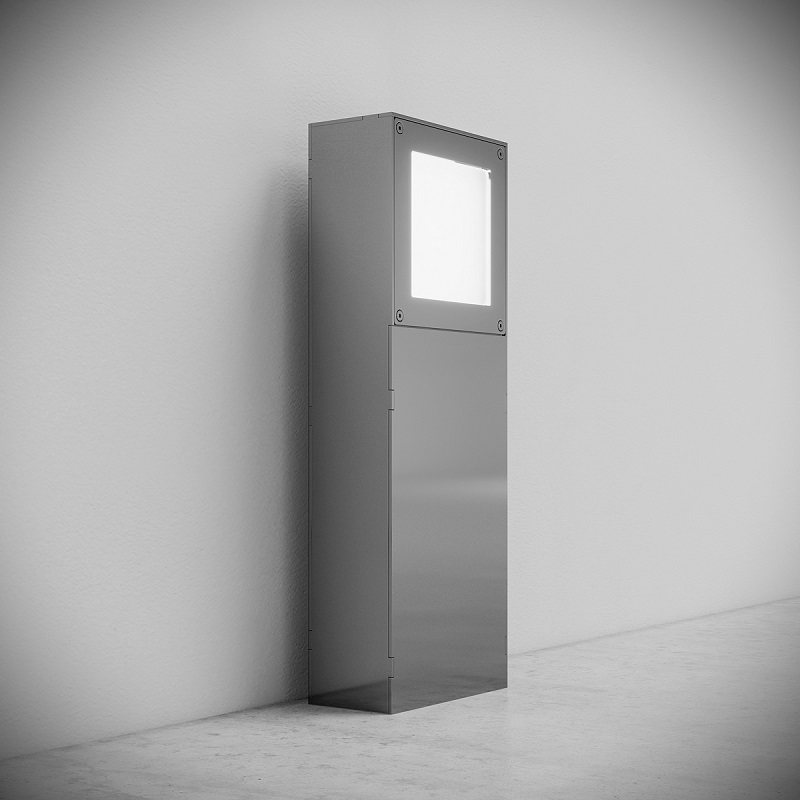
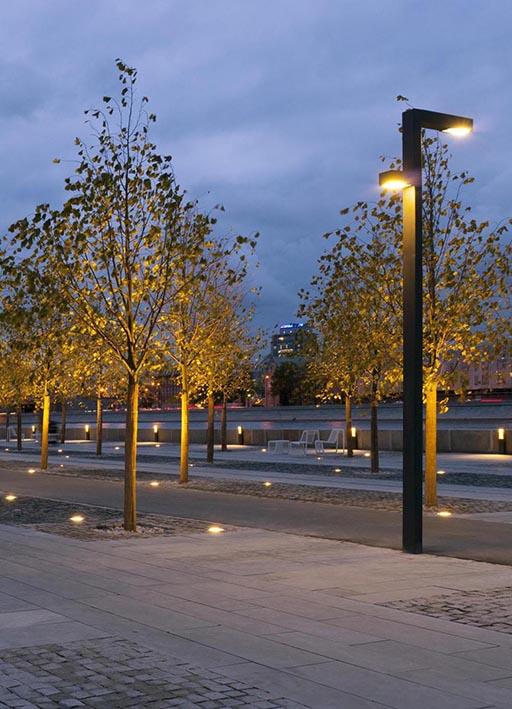
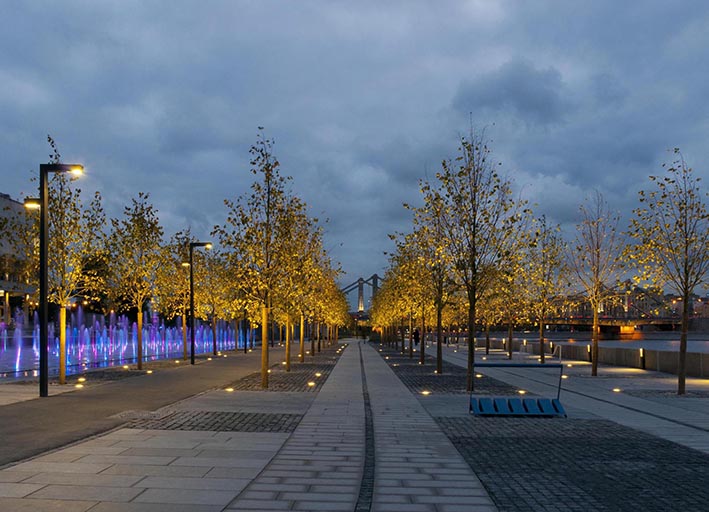
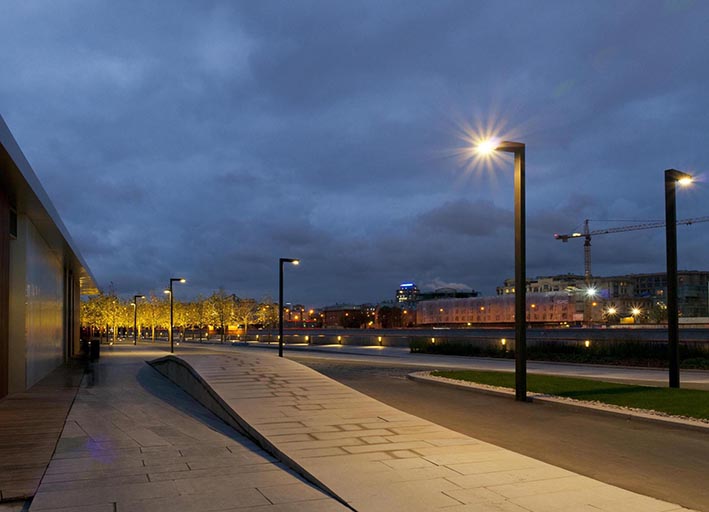
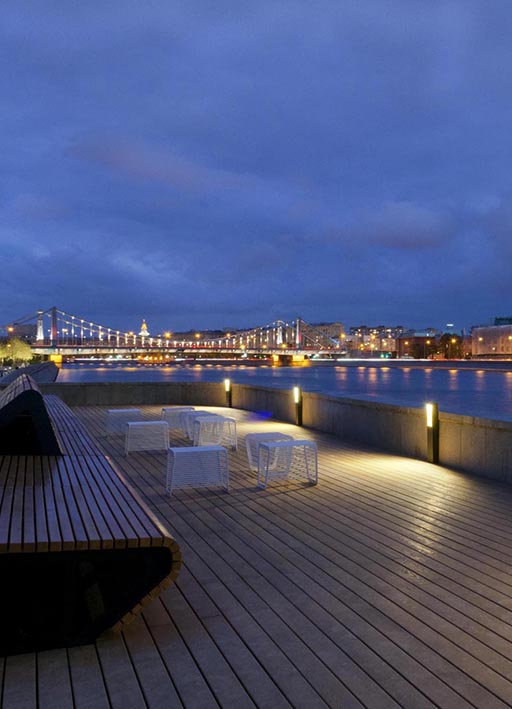
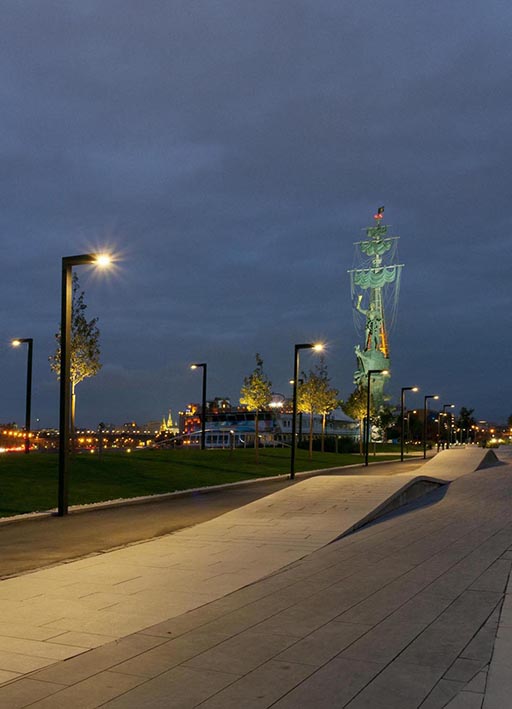
the work of renewing the krymskaya embankment area was part of a larger project aimed at integrating the underdeveloped areas of moscow into city life, in particular revitalising the deserted muzeon park area between the central house of artists and the moskva river. extending from the northern perimeter of gorky park, the krymskaya embankment project creates pedestrian pathways and cycle paths along the south bank of the river, transforming a four lane road into new point of reference for the city, with rows of trees, fountains, cafés and artists’ studios. the dominant architectural motif of the project is a wave: the embankment has been equipped with undulating benches, and undulating paths and cycle paths that create an artificial panorama in motion. this multi-level undulating surface can be used for walking, cycling or roller skating during the summer, while in the winter it is the ideal place to go for sledging, skating or skiing. for design purposes, the area of the park was divided into a number of sections. the bridge area, the artists zone round a 'vernissage' pavilion, the fountain square and the 'green hills'. a stage and two wooden amphitheatres have been built in the area that links gorky park with the krymsky embankment. 28 metal benches, illuminated from within, are spread out along the road enabling pedestrians and cyclists moving between the muzeon and gorky park to take a breather. the entrance to the muzeon is a wooden space of 210 metres with an undulating ceiling, dedicated to vernissages: this imposing structure acts as a transit area from gorky park to the main zone of the embankment, a meeting point for visitors to both of the parks. the fountain area is the central element of the new park and faces the central house of artists, being separated from the river by an avenue of lime trees. this is a 'dry' fountain that does not have a basin filled with water, but 203 remotely controlled diffusers that have been installed directly in the pavement. the most relaxing areas are to be found in the easternmost parts of the embankment, where the focus has been on the creation of an artificial landscape and reforestation. the hillocks, designed for walking, relaxing and admiring the view, have been planted with ornamental plants and those typical of the steppes, such as lime trees, hawthorn, rowan trees and ornamental apple trees. finally, three pavilions have been built on the embankment. all feature the extensive use of glass, a material that was fairly common during the era of the former soviet union. to make the park accessible and attractive 24 hours a day, a particular attention has been paid to the design of light in urban space: an accent light on some details that also works as a company light along the path. the cubo paletto lamps pick out the entire balustrade of the embankment, giving a striking visual impact. all the tracks, instead, are lit by means of giraeFFe lamp posts that guide pedestrians and cyclists offering an optimal security and service light for sport activities; in the square, the dry fountain, together with the avenue of lime trees, creates a luminous composition that combines the dynamic colouring of the lighting of the jets with the more suffused white lighting that traces the avenue of lime trees. in the renovation of this space, light becomes a fundamental design element, both in a compositional and functional point of view: the light for the city is not only a service, but also a joy and life source, symbol of cohesion, occasion for sharing common areas to the rediscovery of peaceful and exciting social relations.
scroll


 Page loaded in: 3.231 - Powered by Simplit CMS