
projects | Viabizzuno progettiamo la luce
discover all the Viabizzuno designs and projects in collaboration with the world’s leading architects and designers.


 en
en
mantova house
place:mantova, italia
project:unostudio architetti associati
photos:gianni basso, vegamg
foreman:arch. federico fedel
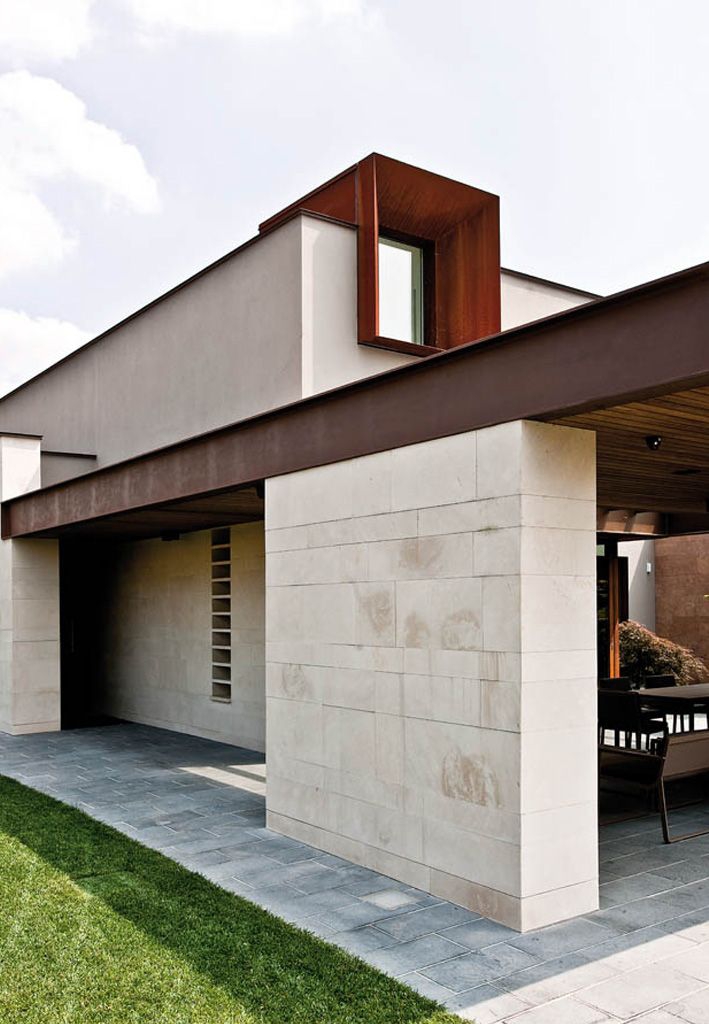
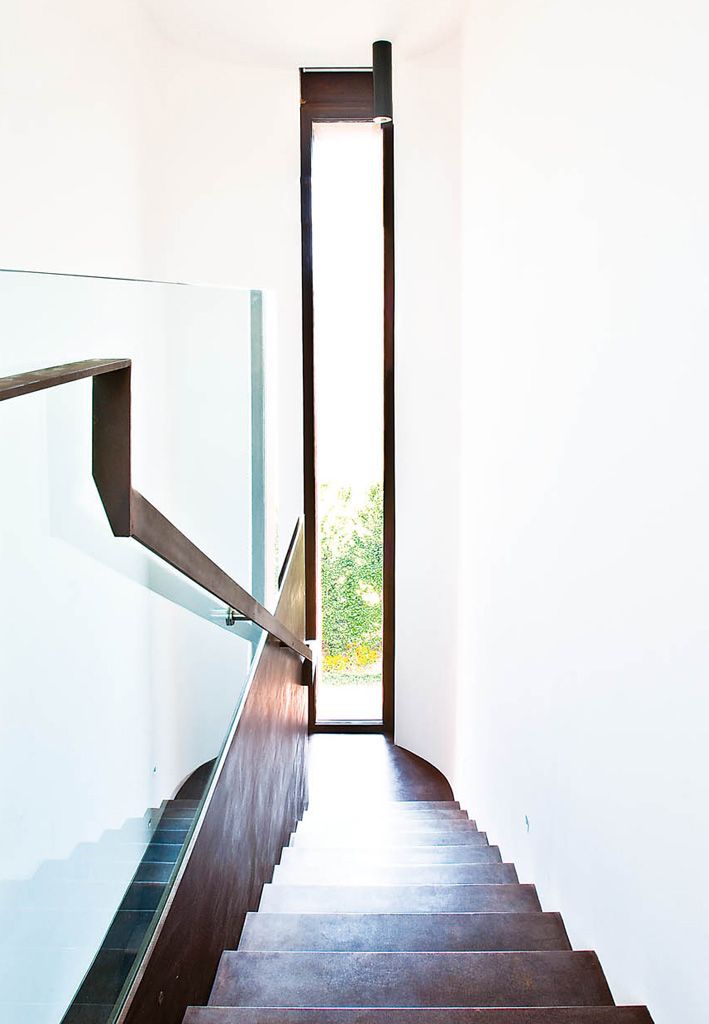
the decision to build a house, the idea of creating one’s own domestic experience in ways that differ from those of life in collective accommodation or in an urban setting generates a series of aspirations, ideas and needs. the duty of every good designer is to translate these demands into a design that, in part at least, embodies them. the aspiration and the objective is to improve daily life, enhancing the comfort and quality of the residential accommodation. the most difficult part of the process is when, as in this case, the location is an unpromising area, surrounded by buildings that are not in keeping with either tradition or a contemporary style. it is therefore impossible to find any connection with a context that is devoid of identity, on which to develop an idea. there is a risk of creating something self referential, which finds its reason for being in the aesthetics, without addressing those needs for quality of life that lie behind the decision to construct a building. it was out of these reflections that this project was conceived, a project that embodies in itself a reconstructed nature, one with which it is possible to develop the very relationships that are denied by the context. the objective is rooted in the roman house aiming for self-sufficiency and focusing on the need for a quality of life linked to the concept of nature. the result is a dilated design that spreads out generating open and enclosed spaces conceived to slot into and complete a missing location. on the outside, geometry, representation and functionality combine in the juxtaposition of elementary volumes identifiable by their different proportions; the choice made by unostudio architetti associati is to develop the roof of the building giving it functions normally carried out by the ground. hence the roof comes to be seen as a garden, with relational spaces organised into separate areas: one dedicated to the swimming pool and solarium, and one dedicated to food and conviviality. between them is a central atrium, where there is a strawberry plant, whose leaves dominate the empty space at the centre of the design. the attics and upper sections completely hide the systems for the production of renewable energy. thus each space is occupied by a sequence that, starting from the entrance, follows a vertical course; this area was designed so as gradually to reveal the mechanics of the spaces following an alternation between interiors and exteriors.
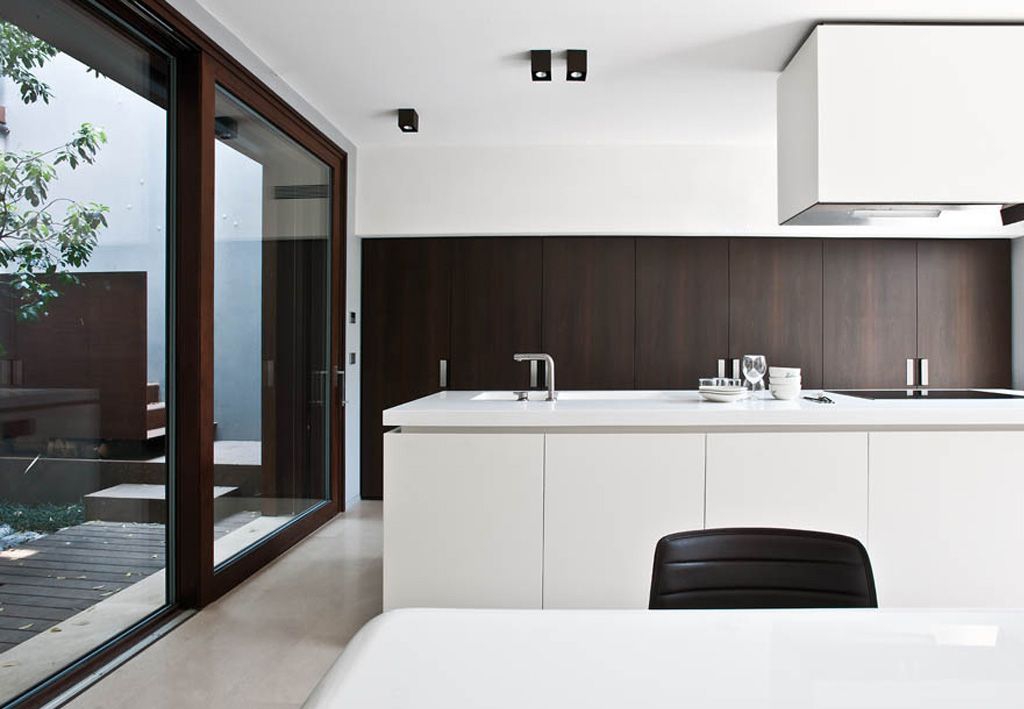
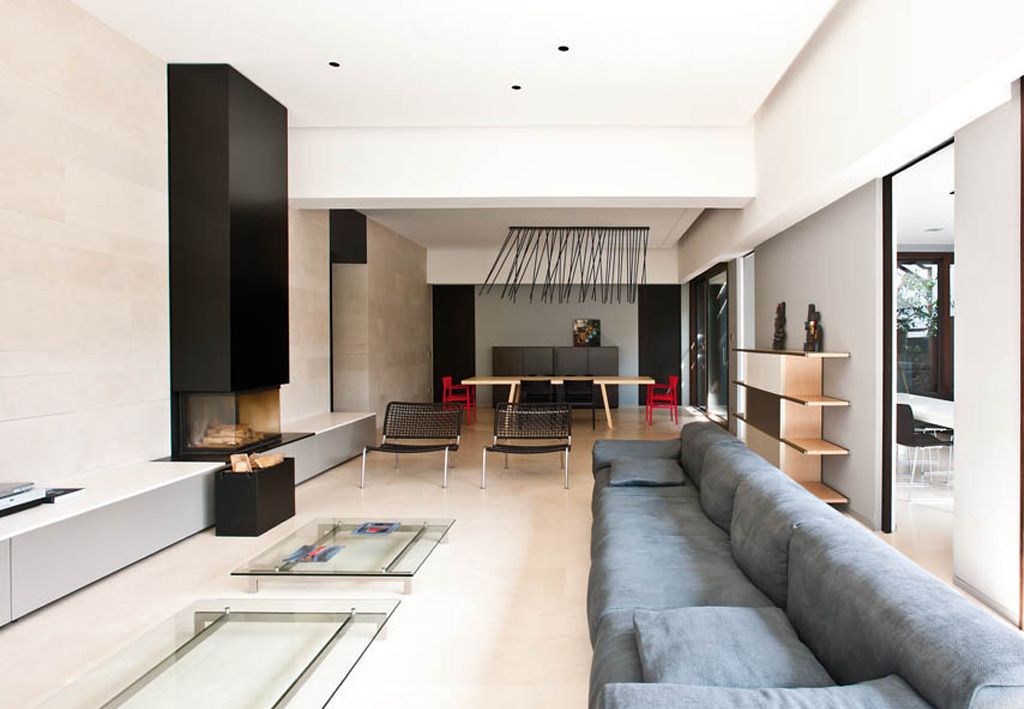
what you see from the outside can only be understood by following the light which, on entering, reveals the empty spaces, following a crescendo that culminates with the light from the lantern in corten on the front side of the building. the spatial sequence of the roman house is translated vertically into a body which, following tradition, has an impluvium at the centre of the composition. the kitchen and the sitting room overlook a garden created within the same building, with maples, lilies and a small stream; a true natural enclosed space, a precious garden, the setting for contemporary everyday lives. inside, the light works along with the elementary structures in the definition of the spaces, such as the cuts in the floors and the designs that they create structuring the different thresholds and actions of the dwelling, diaphragm walls of different thickness marked by the zenithal light. the lighting system guides the actions and experiences of the individuals: observing and watching decline an emotional perception of the rooms, in the relationship with the natural and artificial light, tying to the perception of a simple and rigorous space the emotion aroused by the light when it encounters the tactile qualities of the material and the formal purity of the details. the materials describe the spaces generated by the design, in this way, wood, stone, corten, water and vegetation shed light on the need to relate to spaces designed as extensions of the house itself. the main structure, in brick and concrete, outlines the volumes, while the steel creates the gaps and enhances the building, measuring and unifying the composition. all the floors and the surfaces of the walls, both internal and external, are in natural stone, with the exception of the wood chosen for the floors and terraces on the openable roof. the technical and technological content of the building, which achieves an a+ energy classification, were adopted on the basis of criteria of sustainability.
scroll


 Page loaded in: 0.078 - Powered by Simplit CMS