
projects | Viabizzuno progettiamo la luce
discover all the Viabizzuno designs and projects in collaboration with the world’s leading architects and designers.


 en
en
oratoria house
place:piemonte
project:natascha coolsaet
photos:anna molteni
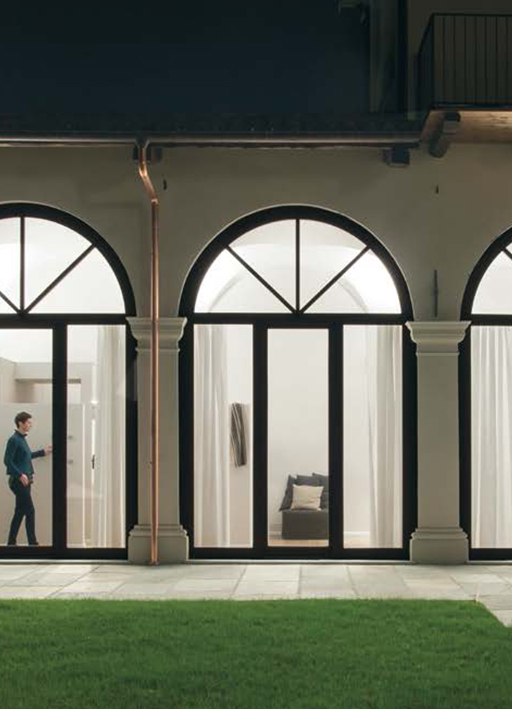
the apartment is located in the historic centre of this piedmont town, in an enclosed
order convent next to an early renaissance church. research in the city archives
shows that architectonic elements of the “oratory” date to the early 11th century,
confirmed by analysis of the geometric motifs in the frescoes on the internal walls.
at that time it is probable that the building consisted only of a chapel and small annexe.
known in subsequent ages as the “oratory of the holy trinity”, it became the
permanent residence of the confraternity of the “red cross” and served as a
house for receiving pilgrims and particularly for taking care of the poor.
A decree by francesco de’ medici in 1583 allowed the fraternity to replace their
traditional white habits with red ones in honour of their work, so linked with blood.
the congregation continued to be known in the region as the ‘red brotherhood’.
the remainder of the building was reconstructed in the early 18th century
when an open-air prayer hall was built around a typical monastery
garden. the structure recently underwent restoration which led to the
creation of 5 luxury apartments set around the shared cloister garden.
the main apartment was bought and designed by a belgian couple
who, working closely with architect natascha coolsaet, succeeded in
creating a tranquil location for those on business trips, pleasure trips
or in search of a place for meditation. the aim was to make minimal modifications
internally in order to maintain the building’s historical nature. the area that was
once the main entrance, and still bears the ancient crest on the cross-vault, was linked
to a part of the narrow prayer hall to create a long, narrow space in the open air.
ancient elements such as the ceiling, the internal staircase and the well
were maintained and meticulously restored. where possible the original
frescoes were retained, creating an artistic journey spanning 500 years.
new paintings were added using traditional lime-based techniques.
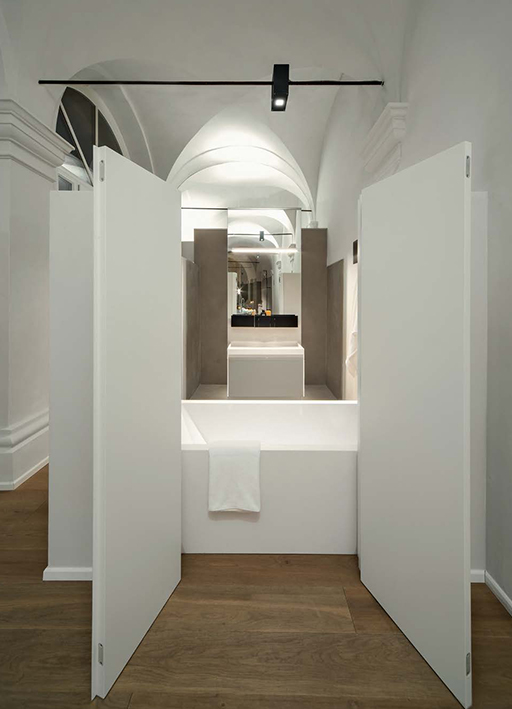
in the ‘loft’ type area the owners wanted to created
two distinct environments and atmospheres.
The main and larger area – probably once used to receive benefactors
– was visually separated from the long prayer hall, thus maintaining an
intimate and secluded character. this living area is the ideal space for
intimate meals, reflection and reading. a place to spend winter evenings
in good company and celebrate life with extraordinary local products.
the area is linked to a cistern below where wine and books are stored.
the longitudinal prayer hall houses a central kitchen, leaving ample open space.
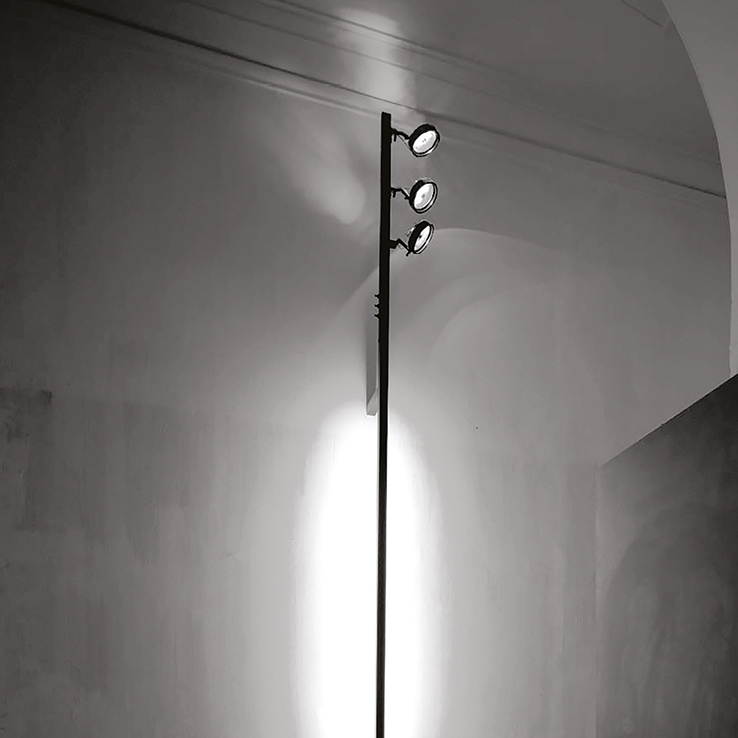
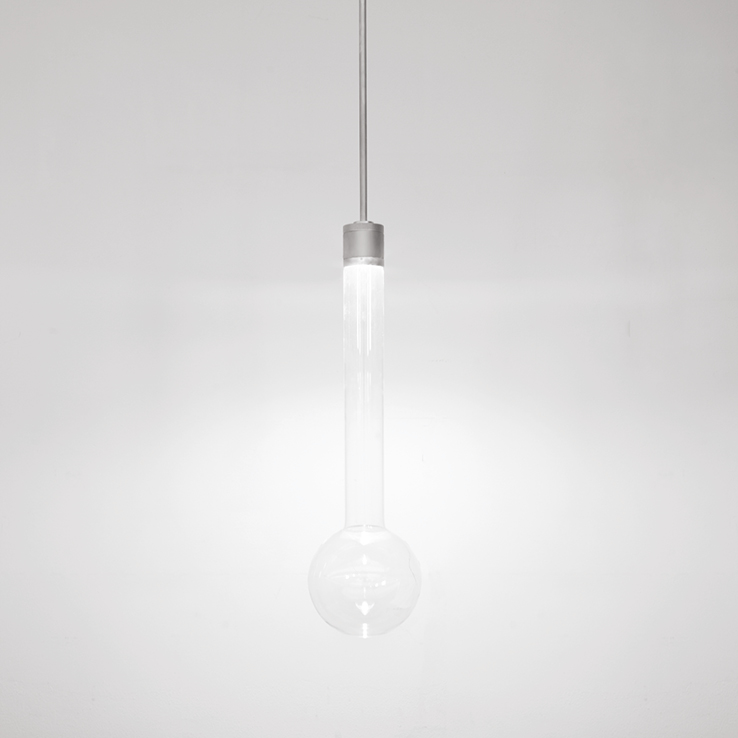
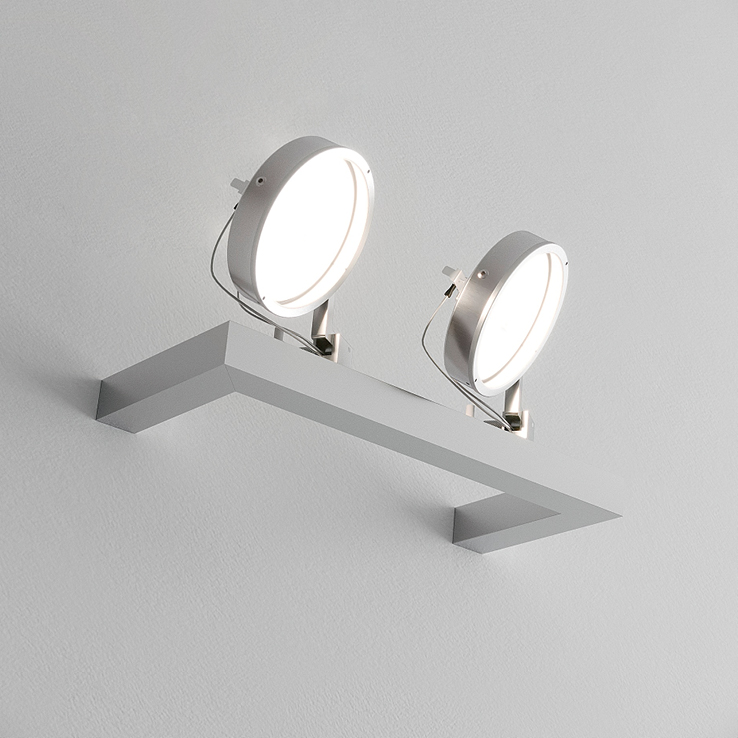
to illuminate the corridor, linked to the internal courtyard, the chain lighting
body has been used which is suited to the open character of natural light,
while the downlight spot was used to emphasise the length and rhythmic
space of the corridor. chain lighting was set on the architectonic beams
in order to obviate any relationship with the specific internal
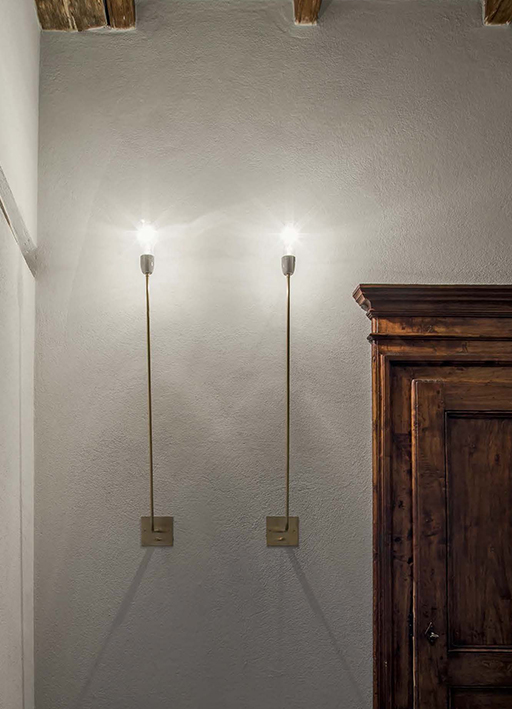
elements of each environment. the other rooms are
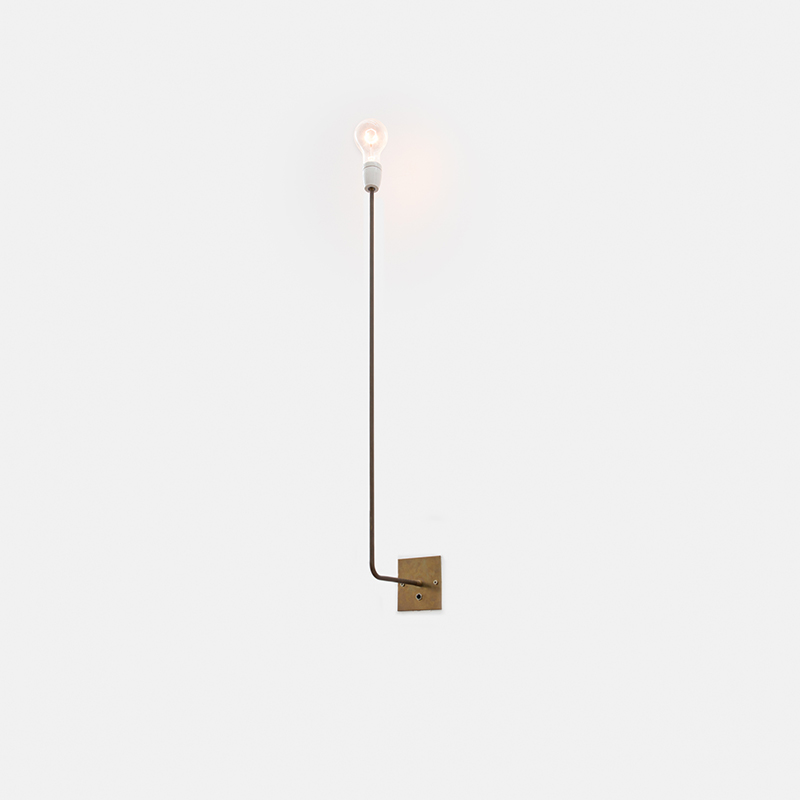
lit with wall-lighting which, apparently, is not integrated
with the context but gives the sensation of being
put there almost casually to emphasise the details
of the ancient remains, such as the precious frescoes or the old red bricks,
and at the same time the new activities (eating, reading, hospitality…)
thus producing the effect of candlelight, warm and welcoming.


scroll


 Page loaded in: 3.604 - Powered by Simplit CMS