
projects | Viabizzuno progettiamo la luce
discover all the Viabizzuno designs and projects in collaboration with the world’s leading architects and designers.


 en
en
bc house
place:guastalla, reggio emilia
project:alessandro veneri, plus concept studio
buyer:cristian bertoni
photos:matteo serri
foreman:studio tecnico magnani
restore light and life to a 1960s house. this is the architect’s aim in this renovation and expansion project; a dramatic transformation which has given a construction style that was very popular in from the 1960 onwards but has now become obsolete a complete makeover, bringing it back to life. the original living space has been implemented with a new volume that extends laterally on two sides of the existing building, of which only the outside walls and part of the ceilings have been kept. the roof overhangs have been eliminated; the two original pitches have been connected with the use of a new continuous metallic mantle which connects the various slopes and houses the photovoltaic panels.
inside, the service rooms (garage, laundry, boiler room, bathroom, storage room) are all on the ground floor; crossing the entrance hall which occupies the full height and opens onto the main stairs, you reach the living area on the first floor, created by demolishing ceiling to increase the height of the rooms.
the first level is comprised of the kitchen, which is in the extension, a bedroom with walk-in wardrobe, a bathroom and stairs to the attic, where there is another bedroom with en-suite bathroom.
the project has been extended to all the furnishing components, designed and built to design, to fully customise the building and its content.
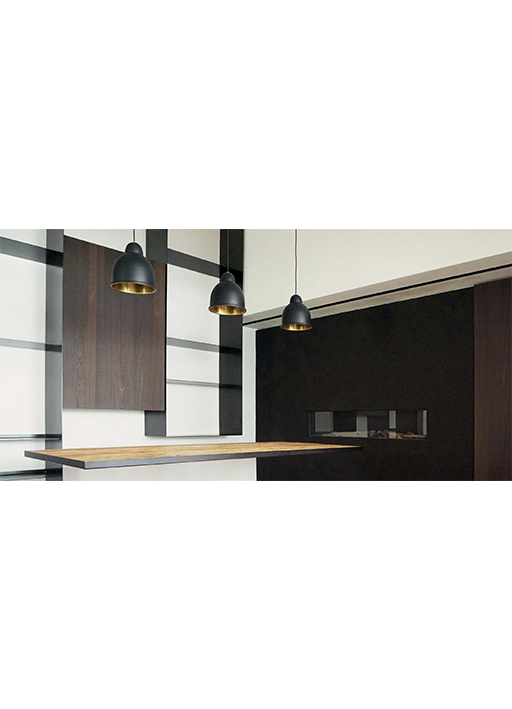
iron and wood are the common denominator in all the rooms in the house: a rational environment, with pure shapes, purposely in contrast with the material effects of the interiors, where the absolute protagonist is the metallic structure which furnishes the double height of the living room; designed to measure, it consists of a 4 mm thick blade which, with a 36 linear metre extension, develops horizontally and vertically on the wall, creating an irregular geometric design, which characterises the setting. between the various shelves, set at different heights, the sliding door that leads to the sleeping area has been installed: continuing on from the doors and panels of the wall unit, it fits into the composition, hiding the access among the hollow and solid areas of the furnishing.
to avoid contrasts and link the rooms together as much as possible, the same type of wood has been used throughout, developed in two different types: ‘rough’ oak for the floor and “burnt” oak for the kitchen and living doors and for the sliding and leaf doors that lead into the sleeping area. this material, in the first of the two version, has also been used for the vertical cladding of one of the bedroom walls and to make the doors of the bathroom cupboard.
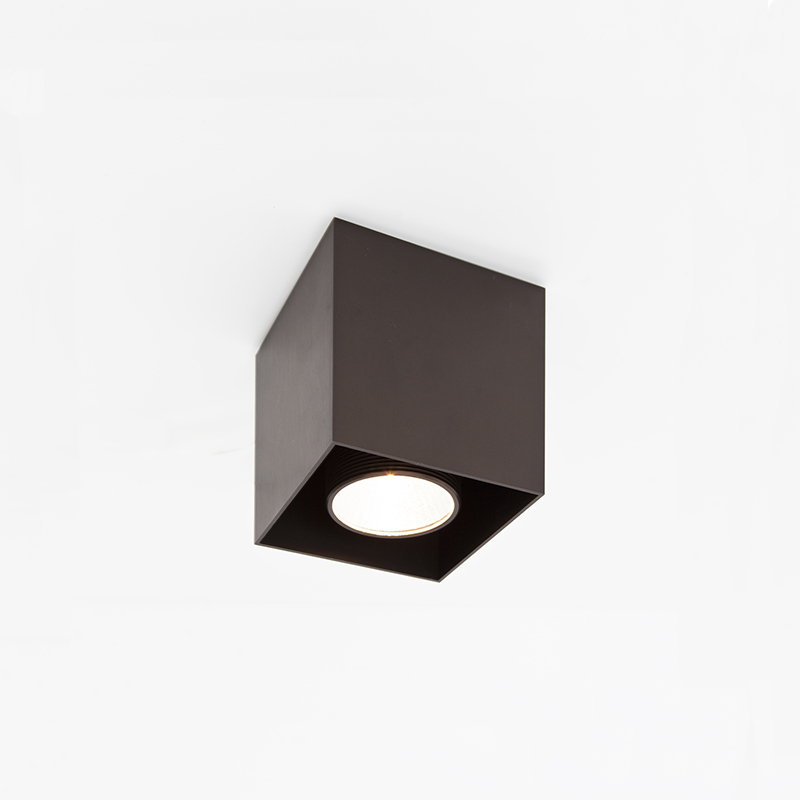
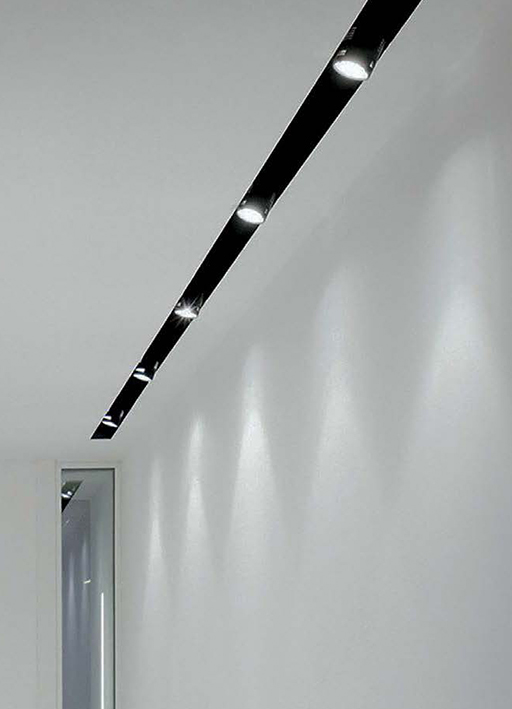
all the furnishings and spaces communicate with a number of light fittings which, thanks to in-depth design, perfectly marry the rational and minimal forms of the building and enhance all the strengths of the project.
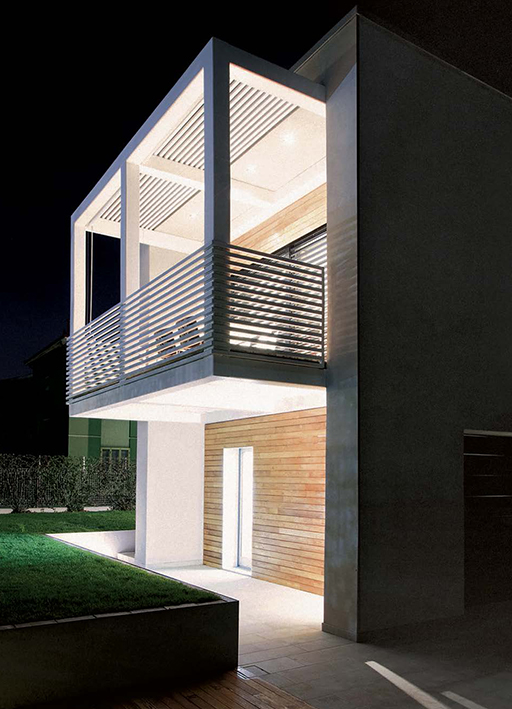
on the outside, the plastered façades are characterised by the openings of the two floors, surrounded by metallic frames which incorporate the single leaf windows and the blinds with adjustable sun shades.
another important aspect of the exterior architecture is the wooden cladding, in teak slats, which has been applied to the door panel in the entranceway and on the southern façade of the extension.
towards the south, there is a terrace created using a metallic structure, an element which strongly characterises the new volume: designed to measure and built using stainless steel tubes painted white, it is suspended, overlooking the garden.
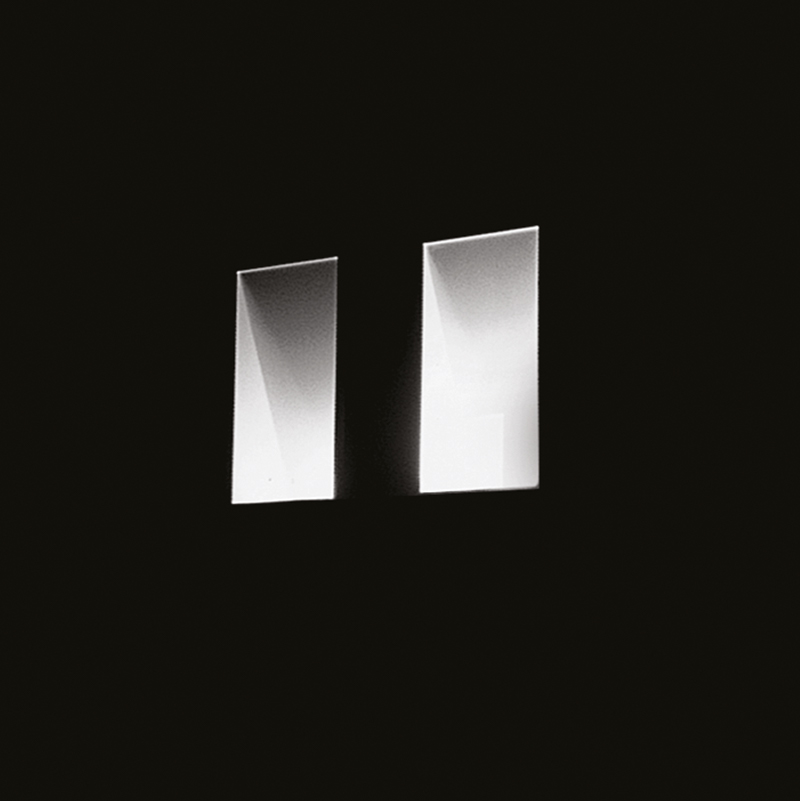
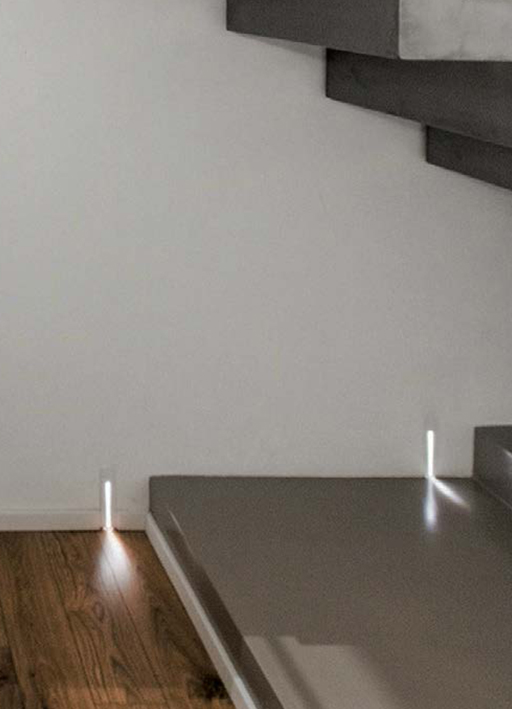
all these details are enhanced at ground level and on the walls with the clever positioning of light beams that emphasize details, volumes and materials.
scroll


 Page loaded in: 3.026 - Powered by Simplit CMS