
projects | Viabizzuno progettiamo la luce
discover all the Viabizzuno designs and projects in collaboration with the world’s leading architects and designers.


 en
en
hangar 16 matadero
place:madrid, spagna
project:studio iñaqui carnicero
buyer:comune di madrid
photos:roland halbe
foreman:vias y construcciones
thanks to a project by the spanish studio iñaqui carnicero,
the former slaughterhouse hangar 16 restored in madrid has become a space
for various activities of a cultural and recreational nature, including exhibitions
in which the works of art are hung on the hooks that once bore animal
carcasses. a limited budget restricted the whole operation of architectonic
recovery to two interventions only. the first regards the doors:
by modifying their position the functional options within the area have been
multiplied. to give one example, the main area can be subdivided into several
spaces thus allowing various activities to be carried out simultaneously.
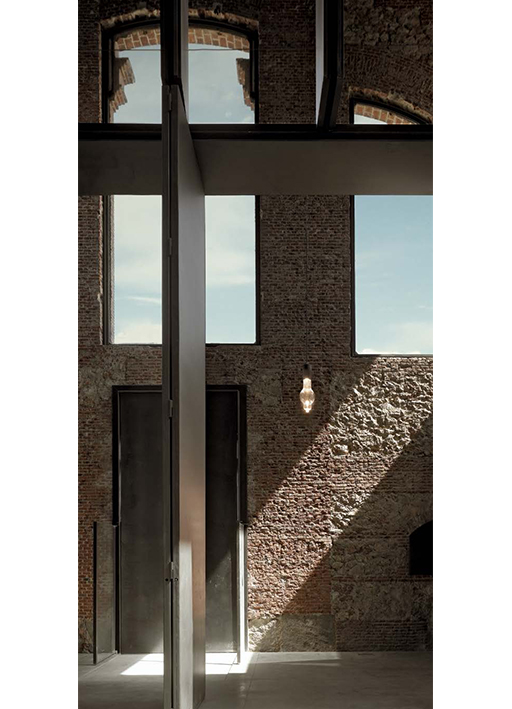
the madrid studio’s second intervention consisted in recovering the masonry,
removing plaster and positively exploiting a living, authentic material to create
a special atmosphere.
these two simple ideas contribute on the one hand to reinforcing dimension and
proportions within the structure, and on the other hand to renewing the building’s
character. to keep inside the budget established by the municipality of
madrid, the intervention was based on the use of one single material and one
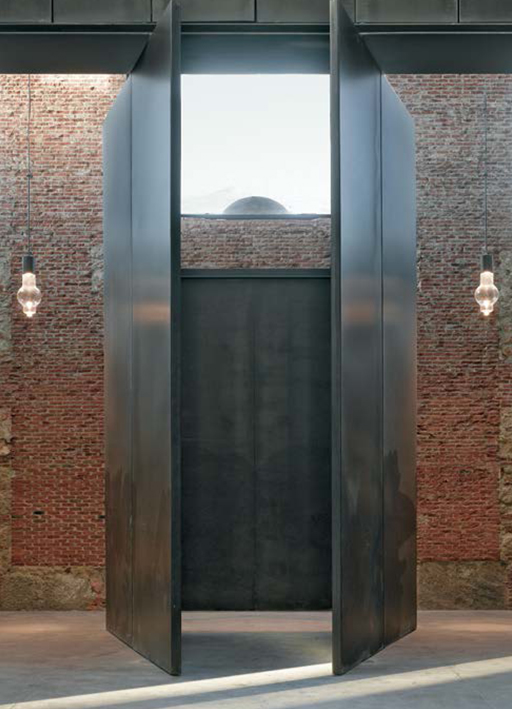
structural feature. at the heart of the project is the choice of a system of doors at
two levels which pivot on themselves in such a way as to meet the needs of those
who will be using the spaces. the doors of the former slaughterhouse
allow the definition of an empty rectangular space, neutral, isolated from the
rest of the rooms, which may house avant-garde installations and projections.
in fact the nave is delimited by a double system of large metal portals: a lower
one that surrounds it to the extent of potential, total closure, and an upper
one that allows the directing of light in accordance with various requirements.
when the central area remains open, visitors have a perfect view
of the interior of this old building whose historic value has been perfectly
safeguarded. not only the doors but also the windows have
been equipped with the same steel mechanism, adapted for this restoration
intervention. the shutters can be closed to isolate the structure from the
outside environment, at the same time darkening the interior for concerts and
other performances. the central door rotates, becoming the element
that defines the threshold of the main space. the chromatic contrast
between the renewed interior space and the sheath in brick positively exploits
this discreet and elegant context dedicated to public events while allowing the
structure however to maintain its delicate industrial aesthetic.
so an encounter between the past and modernity is what the carnicero
studio kept in mind throughout the design phase, basing their choices on the
true social theme of art: an ongoing passage between times, styles and cultures.
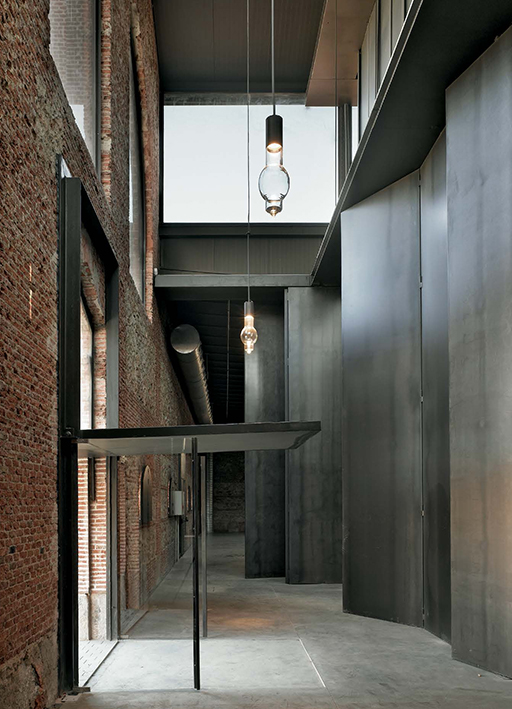
Viabizzuno’s lanterna massima was selected by the spanish designers to
illuminate the internal perimeter of hangar 16. consisting of an ampoule
in extra-clear tempered blown glass and a lamp body in brown painted
aluminium; the illuminating body is perfectly integrated within the
structure, improving and positively influencing the perception of space.
the classic form of the transparent element in fact recalls that the place
belongs to the past, while the dark colour of the metal part refers
instinctively to the contemporary element carried by the doors in dark
steel. at the same time the warm and comforting light of this fitting
renders the spectator’s visit even more relaxing and hospitable.
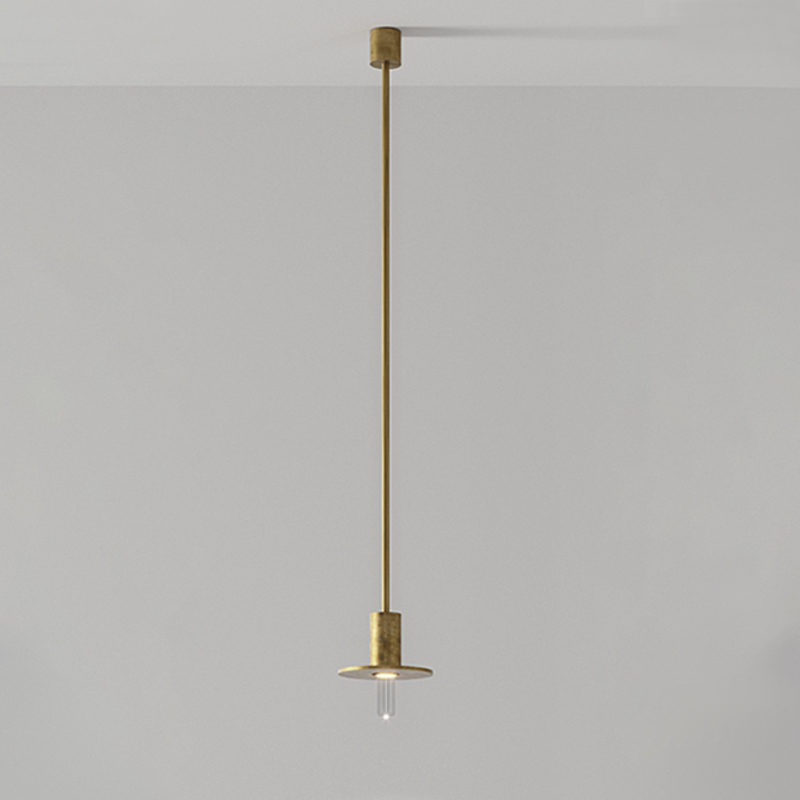
lastly, the light of the candela di vals is equally warm, an illuminating
body designed by architect peter zumthor, positioned above the mirrors
of the bathrooms, in the lee of the walls in brick.
scroll


 Page loaded in: 0.109 - Powered by Simplit CMS