
projects | Viabizzuno progettiamo la luce
discover all the Viabizzuno designs and projects in collaboration with the world’s leading architects and designers.


 en
en
caserta: the royal palace
place:caserta, italia
project:architetto flavia belardelli
lighting project:mario tartaglione, Viabizzuno
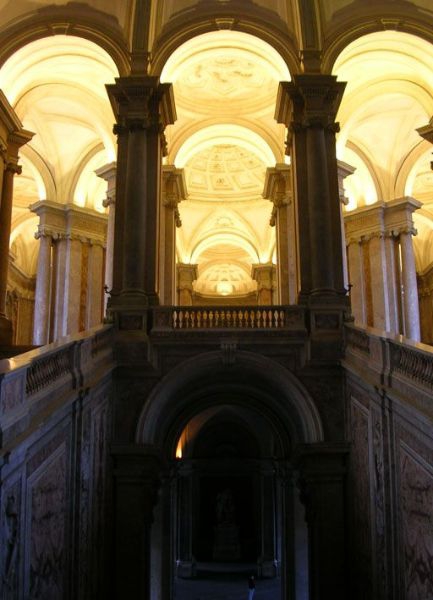
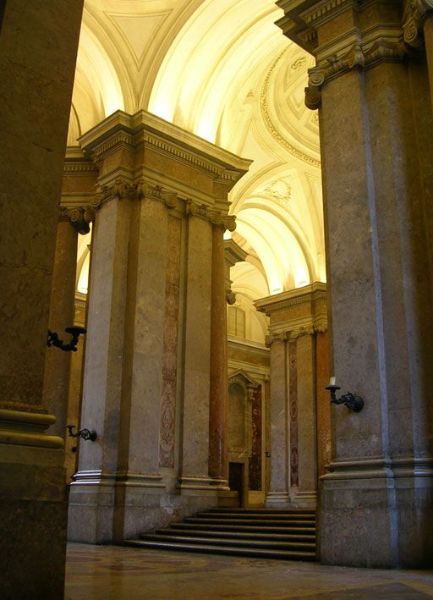
the palace of caserta was designed in view of the projected transfer of the capital of the kingdom of naples from naples to caserta, a transfer which never took place. bourbon king charles entrusted the project to the architect luigi vanvitelli, trained in the late baroque school in rome. the project for the palace, which was built from 1752 to 1774, is based on a compact inward-facing block around four courtyards separated by the inner wings arranged to form a cross. the architectural composition is characterised by the porticoed gallery running the entire length of the palace, linking the main atrium, the grand staircase leading to the royal reception floor, and the entrance to the park, forming a perspective frame for the watercourse making its way to the waterfall which is a splendid backdrop. from the main staircase, through the first-floor vestibule, one comes to the chapel and the royal apartments. the architectural unit of the chapel - although contained within the volume of the palace, which does not betray the presence of a chapel in the serial composition of its exterior façades - has the atmosphere and appearance of a church complete in itself, with a double row of pillars and a women's gallery, surmounted by barrel vaulting and crowned with a semi-circular apse. the royal apartments have preserved intact the architectural and decorative elements of the bourbon monarchy period and the napoleonic parenthesis, exemplified in the three ante-chambers which occupy the central wing up to the main façade: on the left a number of rooms completed in the eighteenth century; and on the right the reception wing, culminating in the throne room, completed during the nineteenth century. besides the main rooms there are smaller rooms, the so-called ‘back-rooms', originally intended for various services; these, opportunely restored and up-dated as concerns necessary plant, are destined to house exhibitions independent of the museum in the royal apartments.
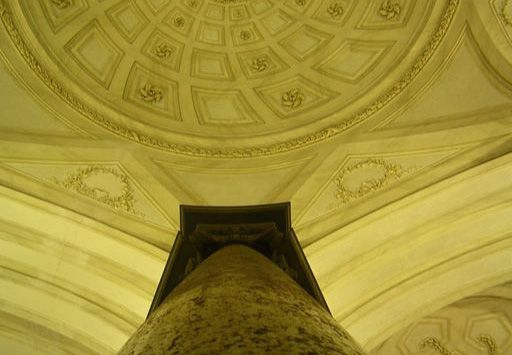
the lighting, in a context of protecting and making available to the public a part of the nation's artistic and cultural heritage, is one of the main features of contemporary museography. artificial lighting is a feature mainly extraneous to the character of the original property, which generally precedes the era of electricity; although it does have the advantage of making the building available to the user even in poor light or at night, thus functionally enhancing the property. the artificial lighting created during the restoration work is intended to produce perceptions as similar as possible to those produced by natural light, using where possible concealed lighting fixtures; where this is not possible, fixtures with a technological design line have been chosen, objects having no reference to the styles of preceding periods. in view of these considerations, the lighting in the palace chapel and the upper vestibule has been achieved using a plant producing effects as close as possible to natural light. the central vault is lit with “cornice by Viabizzuno” lighting fixtures, positioned on the cornice, with 150-watt metallic iodide bulbs and with 100-watt high-pressure sodium vapour bulbs. the same system has been used for the vaulting of the upper vestibule: “cornice” fixtures with 150-watt metallic iodide bulbs, positioned on the cornice in correspondence with each pilaster strip. in the eighteenth-century wing, some of the ‘back-rooms' are decorated throughout with fresco work, and here free-standing lighting fixtures have been used: vase, positioned in the corners of the rooms, with 2x24-watt fluorescent bulbs, giving diffused light. where more concentrated lighting is required, for viewing works of art or wall paintings, notte floor fixtures have been used. the entire lighting project was designed with special attention to the spaces themselves and to their enhancement, exploiting modern technology and the use of light bulbs to lend new life to spaces conceived and built only in natural light.
scroll


 Page loaded in: 0.078 - Powered by Simplit CMS