
projects | Viabizzuno progettiamo la luce
discover all the Viabizzuno designs and projects in collaboration with the world’s leading architects and designers.


 en
en
country house in montemaggio
place:montemaggio, radda in chianti, siena
project:architetto john pawson
lighting project:Viabizzuno
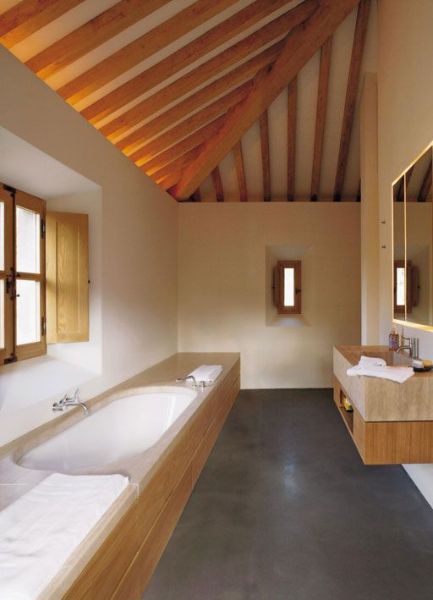
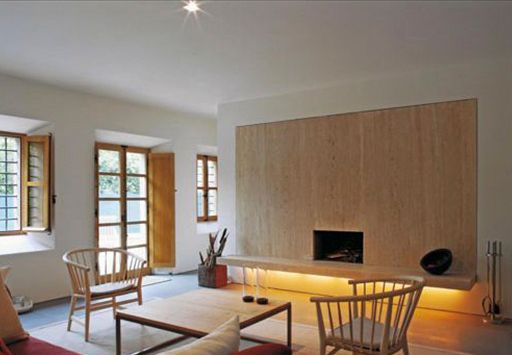
montemaggio is in central italy, between perugia and cortona, close to the border of tuscany and umbria. this is still a wild area, uncontaminated nature, with woods incredibly rich in flora and fauna. in 2002 the director of the netherlands opera bought a property in these mountains, with the intention of creating a holiday home for himself and his friends and collaborators. the property is situated in a valley at an altitude of 650 metres on the sea level and includes a number of pre-existing buildings, the most outstanding of which is a small monastery dating back at twelfth century. at the time of purchase, all the pre-existing structures were in a state of total abandon and disrepair. the client's initial instructions were to make some of the smaller buildings into residential units, seeking at the same time to stabilise the ruins of the monastery and to include a garden of sorts. but with the passage of time another, more ambitious, vision of the project took shape, a project in three stages, one to be completed each year. as well as creating a number of dwellings, the plan was to use various components of the project to test a sort of ‘interface' between architecture and landscape, between artificial and natural. the central point of the first stage of the project is the convent, a simple two-story structure now a complete ruin, distinguished by a stairwell crowned with a dovecote. the project envisages restoration of the original stone exterior with a few very small interventions to make the shape more regular. the stone walls were originally plastered, but are now left bare, in keeping with traditional local architecture. since it is necessary to lay new foundations and floor flags, it becomes an opportunity to open the surfaces of the interior floors, creating a very large south-facing living space, with north-facing kitchen and dining-room overlooking the now-restored walled garden. the restructured stairwell, with windows facing in all directions, is nine metres high and leads to private rooms and guest rooms on the upper floor: asymmetric light is provided by m1 fixtures recessed in the treads. the second stage of the work concentrates on the monastery, fulcrum of the overall project. the restoration plan removes all the numerous later additions, leaving the core essentially in a single volume with a staircase connecting each floor. restructuring of the interior is based on a simple combination of walls in plain plaster, beams in evidence for the chestnut wood ceiling, and florentine pietra serena used for floors, chimney pieces and other general building interventions. roman travertine is used for washbasins, sinks, benches and work surfaces. the ground floor is subdivided to make a large sitting-room, a walled courtyard, a kitchen, a pantry, and other smaller rooms, while a new space partly below ground level serves as a cellar and store room. the first floor has a more secluded sitting-room, and there are private rooms on the second floor, especially designed to take full advantage of the magnificent view which can be enjoyed to the west. a walkway links the monastery to a swimming pool by means of a guest pavilion. the central point of the third stage of the project is to be the home farm, where it is planned to build further autonomous dwellings for guests from the two adjacent structures and the free-standing guest pavilion. the more open landscapes and low walls of the farm will give the final touch of class to the entire complex, characterised by the interplay of themes and variations which begins with the segregation of architecture and landscape represented by the high ‘castle style' wall of the monastery and the enclosed courtyard, but then undergoes transition in the interior garden of the convent. the lighting project is coherent with a search for the relationship between architectural space and nature: lamps are concealed behind mirrors, into slits in the ceilings; lights reflect on the windows and converse with natural light, accompanying guests in an endless syntony between the light of the valley and that of the house.

scroll


 Page loaded in: 0.078 - Powered by Simplit CMS