
projects | Viabizzuno progettiamo la luce
discover all the Viabizzuno designs and projects in collaboration with the world’s leading architects and designers.


 en
en
marella ferrera al museo biscari nella sicilia del settecento
place:museo biscari, catania
project:arch. paolo paolini, studio licata & santangelo, arch. giuseppe scuderi, ing. valeria petrina, ing. attilio zuccarello, ing. michele marco aiello, marionanni
buyer:marella ferrera
lighting project:marionanni
the biscari museum is a place where the conservation of artefacts from antiquity and the ‘mirabilia' of nature used to revel in the study, investigation and celebration of the classical, in contrast with the cultural reality of the age, which was steeped in the new illuminist principles.
the museum was founded by ignazio paternò castello V, prince of biscari, who in 1752 assigned the design and construction to the architect giuseppe palazzotto. the medal commemorating the foundation of the museum was coined in 1757 but it was only in 1758 that it was actually opened.
when palazzotto died in 1764, the role of architect to the fabric was entrusted to francesco battaglia, who designed the expansion of the museum and the display of the new enlarged collection. the rapid spread of the biscari museum's fame among europe's principal centres of learning and its resulting emergence as a destination for travellers on the ‘grand tour' led the prince to appoint a museum guide, a role he assigned to the florentine abbot, domenico sestini.
so in 1776, the first edition of the ‘description of the museum of antiquity studies and the natural history laboratory of his excellency, the prince ignazio paternò castello, nobleman of catania' was published.
the display established in 1784 is the definitive one, as has been passed on to us in the descriptions of travellers, including goethe in his ‘sicilian journey', in the photographs of federico de roberto and in the studies of the archaeologist guido libertini.
the museum is split into its two antiquaria and naturalia sections and is arranged around two courtyards, separated by a colonnaded lobby. the vast antiquity studies section, consisting of the ‘marbles gallery' and the ‘etruscan vases' and ‘terracotta pots' rooms, was situated around the perimeter of the two courtyards, while the natural history gallery occupied the rooms bordering the present-day piazza duca di genova.
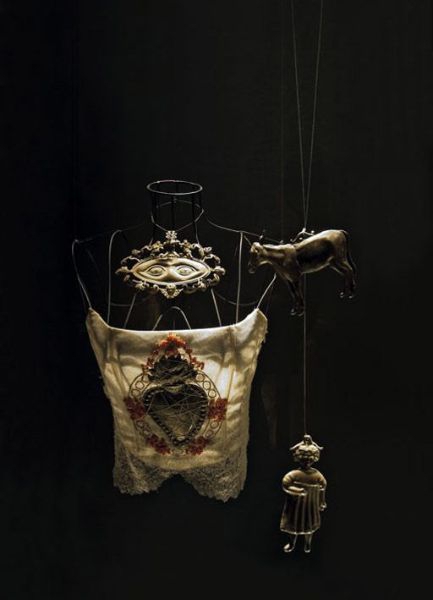
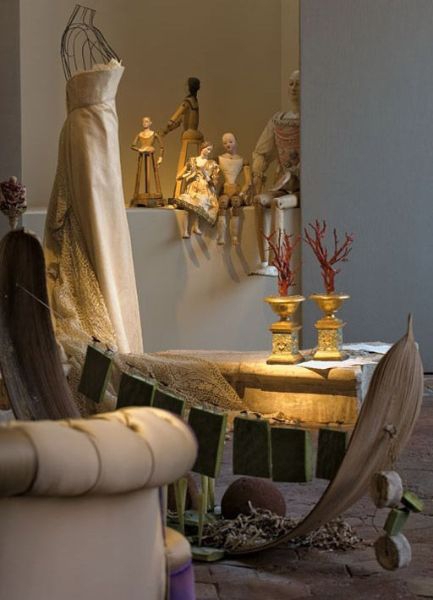
it is on this very piazza, the site of the original facility with its single elevation and two display galleries of figured vases, other clay products and natural history collections, substantially altered over the years and increased in height, that the reincarnated biscari museum has been established. a new museum, in fact, has come into being, reviving the historic division to create a new and stylish display arrangement. within the historic premises is the new museum of fashion, the museum of elegance, the world of style and atelier of haute couture of marella ferrera, in a word, mf, marella ferrera, the sicilian designer who works with fabrics, amalgamating them with other forms of material: lava stone, obsidian, terracotta, rock crystal, copper wire, paper, cork and roots. her great urge to experiment is fuelled by the curiosity, intuition and imagination that are her hallmark, making her a true sicilian woman, with strong ties to her own land and traditions but, at the same time, intellectually enquiring and keen to confront other spheres and learn from them.
perceptive, thoughtful and enthralled by sicily, she has learnt to treat this land as an infinite source of cues, materials, emotions and ideas that transform her style into an outlook on life, a philosophy and a model of design. hers is a mind that cuts and sews dreams and, using the same approach, has taken on the adventure of creating her own place in palazzo biscari.
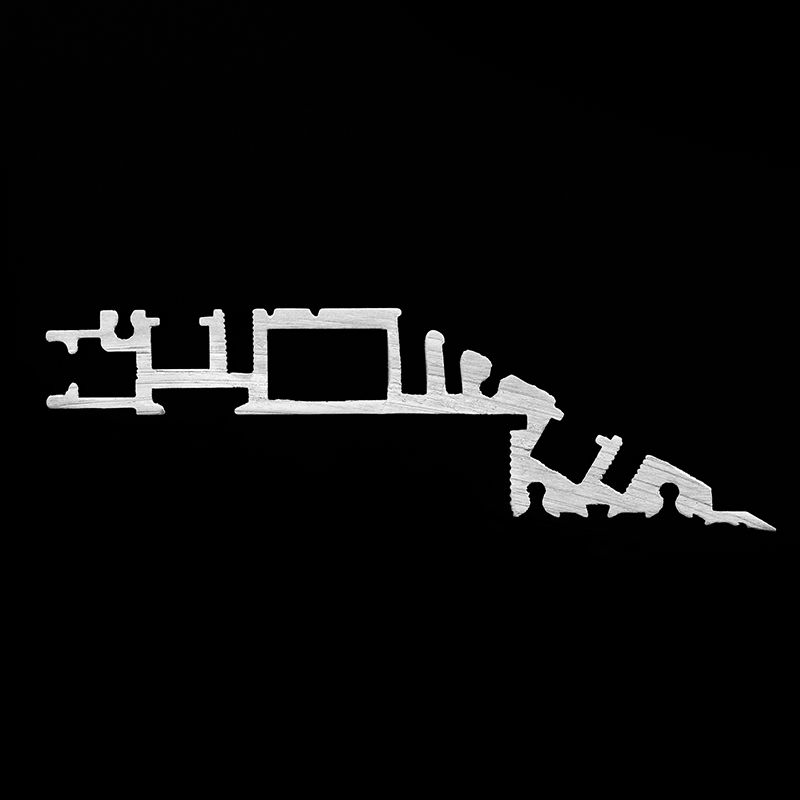
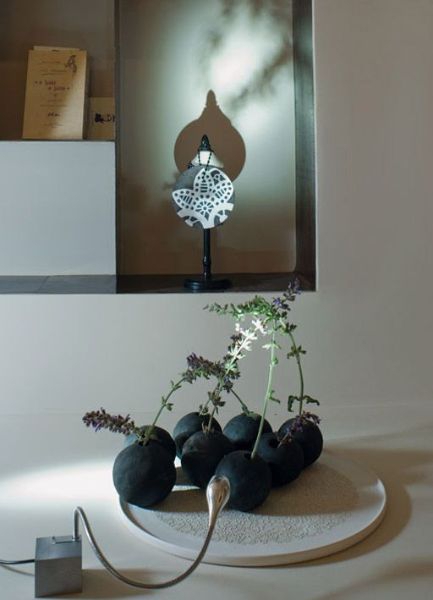
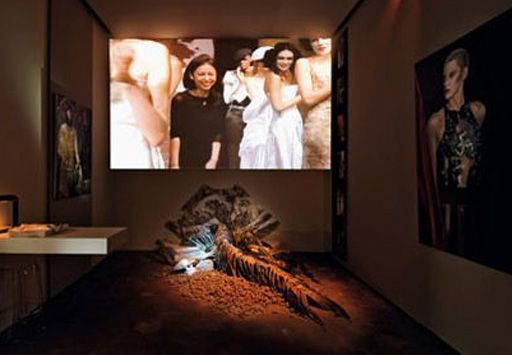
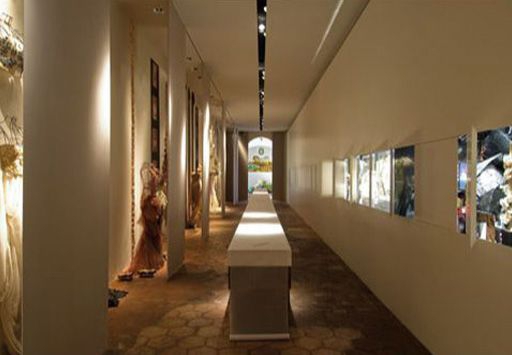
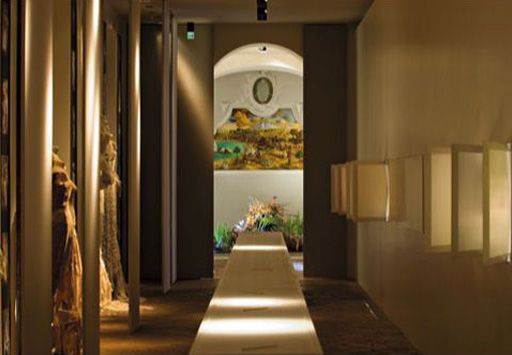
in this restoration project lies the crux of everything. there is intuition, passion, challenge, material, research, light, food, heart, courage and experimentation. there is the whole outlook on life of a woman designer, marella ferrera and of the team behind her that helped her achieve a dream. the intuition lies in the conviction of having found the right place to establish marella ferrera's museum & fashion, her workshop, showroom, historic archives and design studio, in the ancient and glorious biscari museum. the passion lies in having been able to translate intuition into an actual project. the challenge was in bringing new life, in the right way, to what was already, in everyone's heart, a significant place with strong connotations. the research consisted of a firm belief in the contribution of a new graduate, who took on the thesis of restoring the place, and involving him, to the point of overseeing him, only changing materials but accepting the main principles of his design. the material consisted of marella's fabrics, mario nanni's lighting and the dishes of the itinerant chef, carmelo chiaramonte who was to occupy the ‘caffetteria delle s'arte'. the heart lay in getting carried away by the sensations of this place, in getting the designers passionately involved in the adventure, in respecting its history and adding a further chapter. the courage lay in taking directions that were not always the easiest, in excavating the walls and floors to expose the substance of the place; it lay in having the patience to wait, taking time to decide and to design. the experimentation lay in being able to combine a team of designers, each an expert in their field, and respecting their intuitions, in a belief in the ability to implement a project that was equally conservation and state-of-the-art and in understanding that light can break down matter to create form. the dialogue between marella and mario was undoubtedly fundamental to the success of the whole project: the areas retained their original layout and light was the substance that shaped them most and gave them new character. the areas are divided by items detached from the original perimeter of the building; cupboards, suspended ceilings and panels create continuous intervals of light and shade between the structural elements of the building and those that support and assist the new function of the museum. the blank page becomes the real key element in this project: it proliferates and recurs in panels that move like stage sets, ready to reveal dreams and secrets, clothes and fabrics. the light fittings designed by mario nanni fit perfectly into the structure, complementing the various areas of the building: a light from above focused on the worktops denotes the workshop area, proving both functional and flexible; a diffused light, reflected off the ceiling of the entire space, marks the areas at times of closure and ceiling recessed wall-washer fittings appear behind the stage-set panels; the pages of the book of light, with its distinguishing beams of light along the profiles, becomes a display system for marella's creations. it is couture lighting, absolutely appropriate for enhancing the designs on display and for giving new shape to the areas of the ancient museum. the fascination, wonderment and sanctity that so much symbolise this area are resurrected in the shape and layout of the museum while passion and enthusiasm are evident in the creations of marella ferrera and of mario nanni; the imagination of things coalesces into the material in this place which, over the centuries has been destined to be a treasure trove and guardian of masterpieces.

scroll


 Page loaded in: 0.078 - Powered by Simplit CMS