
projects | Viabizzuno progettiamo la luce
discover all the Viabizzuno designs and projects in collaboration with the world’s leading architects and designers.


 en
en
cusumano wine cellars
place:partinico, palermo, italia
project:ruffino associati
lighting project:ruffino associati, Viabizzuno
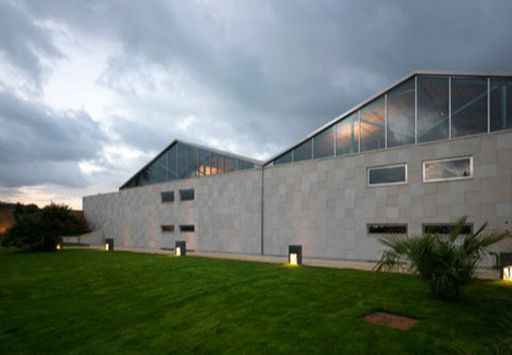
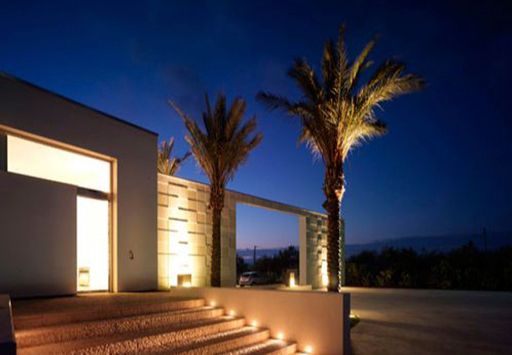
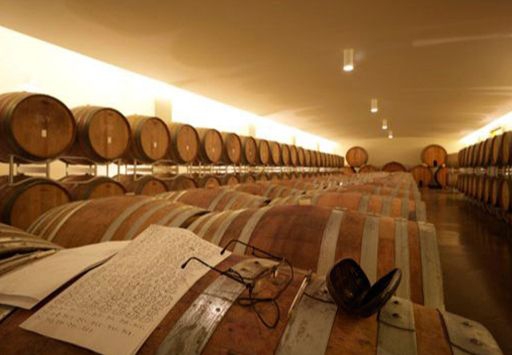
the cusumano wine cellar is a project begun in 2002, two years before the first stone was placed; a most exacting project involving continual consideration of all the issues involved in such a project, where technology and image continually struggle for supremacy. this project by studio ruffino associati was developed in close collaboration with the client, and was thus tailor-made; with all the ability, competence, and artistic inspiration of the tailor-architect. a technical space was made with the support of wine specialist mario ronco and of the cusumano brothers, alberto and diego: visits were made to various wine cellars, in italy and elsewhere, and whole days were spent in the pre-existing cusumano wine cellars in order to identify currents and requirements; there were lengthy meetings with suppliers of all the necessary technology, towards understanding the use, function, and cycles of a complex procedure which begins with the earth and ends at the palate. it became possible to create a rare syntony, which brought together on many occasions studio ruffino associati and the cusumano company from designing the stand for the vinitaly exhibition to the storehouses in the countryside to the wine cellars of partitico and ficuzza. the cusumano company, in the person of diego cusumano, head of marketing and sales, made a courageous decision and chose image and communication as the fundamental basis for making known the quality of the wines produced. choosing an approach closer to communication than to the world of wine, moving away from the classic image of country wine cellar and rustic wood, the project was based on colour, on the choice of materials, and on details. the first model produced was an abstract element, consisting of an oak board, a stainless steel pole, and a piece of leather, which while arranged in a seemingly random manner in reality illustrated what was to become the shape of the final project. in this first study the oak represented tradition, the passage of wine through wood, which gives it unique organoleptic properties and bouquet; steel represented the innovation which marked a turning point for wines in sicily because together with the use of controlled temperature it made possible the production of quality wines where traditionally only blending wines had been made; and leather symbolised the human contribution, the fundamental essence, for the goodwill and cordiality of the people involved were fundamental components for bringing the entire project to fruition. as has been noted, the two years spent on the preliminary study were formative for all concerned, directed as they were to research and to the creation of what today is a genuine ‘cusumano style', the perfect blend of the reciprocal wish of both designer and client. a mediterranean minimalism, with little minimal and nothing shouted, which like the local cuisine is made from simple ingredients blended with unique imagination, where the infinite scents never lose their uniqueness, where combinations of sweet and savoury, sharp and sweet, are the protagonists. a mediterranean minimalism built from natural stone and architectural styles which are the fruit of sicily's thousands of years of changing domination, each change having left some trace: a colour, an element of the mediterranean landscape, blended with light and shadow. and this last element inspired the choice of designing with Viabizzuno, the company which best expresses the concept of lighting closest to the project, lighting composed not merely of lighting fixtures and light bulbs, but most of all incorporating the essence of light itself, where shadow has equal status with light and the fusion of the three elements, light, shadow and architecture successfully defines the space and enhances its characteristics. the project is fundamentally composed of three elements: the first is a historic nineteenth-century ‘baglio', built on the foundations of a site probably dating from the period of arab domination in 1100; the second is the new wine cellar and the third is the garden with the wall which acts as a ‘hyphen' linking the different elements and the different spaces. the ‘baglio' was a typical sicilian installation consisting of a blind four-sided building disposed around a spacious interior courtyard. the cusumano ‘baglio' has a fortified enclosure, a tower for sighting and defence, stables, and a well. while the technical aspects of the project were being completed, work was begun to consolidate and restore this element. the former stables have been converted to a reception room with bar, a drawing room and a library with works by sicilian authors and books about sicily, and there is also a space which can be used for wine-tasting. in the tower is a modern kitchen, a dining room, and a quiet room. the long side of the building, where the spaces for fining and ageing are situated, is orientated east-west, to make the best possible use of sunshine and winds in this region, making it possible to control the temperature in these spaces by the most natural and economical means available, using wind chimneys. at the head of this element sixty metres long and twenty metres wide, at a depth of six metres below ground level, is a lush green garden, the largest wall of which is kept permanently damp by a flow of water, creating a cool damp micro-climate ideal for the fining area which, drawing in cooled, humidified air helps to regulate the interior temperature. the structure of the building consists of a frame-bearing structure, beams and pillars in reinforced concrete, perimeter infill with brick blocks for good control of temperature. the twin-gable covering, inspired by the characteristic store-houses of the area but built with steel trusses and wood panels, the elements which first inspired the project, creates a ventilation space, ensuring correct thermal insulation. the offices, instead, have a flat roof, making a cubic building clearly of arab inspiration, so bringing together in the same context that precious heritage of the island, two elements typical of the architecture of western sicily: the arab style and the style born of the numerous influences left by all the various rulers from the continent who over a space of centuries passed through the capital of sicily. the union and caesura of these differing styles of architecture is made by the garden and its wall which, crossing the entire building in a north-south direction, also acts as a division of different logistic functions. the historic garden of the original ‘baglio', with citrus fruit trees, prickly pears, olives, and a tall palm tree which in arab semiotics denoted the presence of a well, finds its natural continuation in the citrus grove which seems to spill out of a natural breach in the surrounding wall of the ‘baglio' forming a link to the wine cellar, followed by other citrus trees paired with palms and many other essences typical of the mediterranean bush. the realisation of this wine cellar, which has its origins in a conscious decision to follow the path of innovation and adaptation in order to maintain the leading position held by the cusumano family in the oenology market, was made possible by the fundamental far-sightedness of the head of the family, francesco cusumano, who had the courage to place well-deserved trust in his sons alberto and diego to increase the range of products and to undertake the route of bottled wine. the cusumano family had for many years dealt in bulk wines and concentrated must, but now the new generation has decided to diversify its activities and begin direct production, with close control of the product from the vine onwards, making quality wines their major brand. the purchase and replanting of a number of vineyards were the turning point for the company where alberto cusumano is now in charge of production and diego of directing company and commercial policy. certainly, producing good wine is an arduous task, but selling it is even more difficult, especially in an area which traditionally dealt in blending wines. this is the wager which the cusumano family has won, as numerous prizes and orders testify.
scroll


 Page loaded in: 0.078 - Powered by Simplit CMS