
projects | Viabizzuno progettiamo la luce
discover all the Viabizzuno designs and projects in collaboration with the world’s leading architects and designers.


 en
en
maybach museum of period cars
place:neumarkt i.d.opf, germania
project:berschneider + berschneider, architekten bda innenarchitekten, johannes e gudrun berschneider
lighting project:berschneider + berschneider, architekten bda innenarchitekten
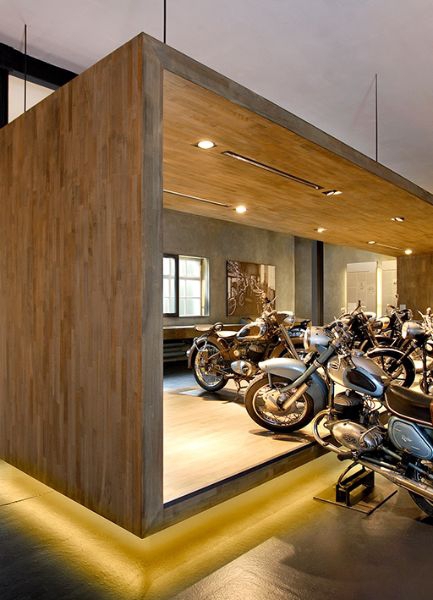
new life for a historical building. this project is the extraordinary reconversion of a historical motorbike factory in a dynamic cultural centre with annexed museum, restaurants and sales activities. the production area of the historical 'express fahrradwerke ag' becomes the pulsating heart of an exhibition centre and hosts a unique maybach collection . this collection of historical cars is the result of helmut hoffmann's meticulous passion. it will be enriched with motorbikes, bicycles and related classical accessories that belonged to the express company. the exhibition area will not only be a museum, since the floor plan of the building makes it ideal to host events such as conferences and meetings in a really unique setting. restaurants and shops that look for an evocative and stimulating environment will find their ideal location in the building, which can host a wide range of events, such as conferences, architectural congresses and film festivals; in short, any event designed to create atmosphere and convey emotions. both exhibition areas will be located in the southern sector of the building with annexed reception, gift store and info point. even the areas between the main bodies of the building have been designed to encourage relations between visitors and the hosting facility. lighting and multimedia facilities located in these areas can be customised to meet the requirements of more complex events. the former administrative building overlooking holzgartenstrasse will be entirely renovated. the first floor and part of the ground floor will be occupied by sales activities, while the remaining area on the ground floor will hold a restaurant and a cafeteria. in about 10 years the project will enter its second phase, which will witness the construction of a new facility based on the concept of old&new. the lower floors of the new building have been allocated to handcrafting workshops where artistic features prevail on the sole manual skills of the trade. there could be anything, ranging from the studio of an avant-garde artist to the workshop of one who renovates period cars as a passion. the top floors will be reserved for the offices of companies operating in the creative sector and to successful entrepreneurs focused on the future. all this will weave a synergy between past and future in a building that merges the charm of distant times with a clear vision of the future.
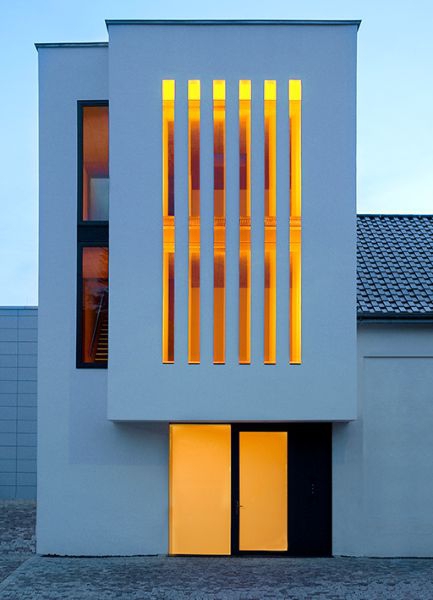
the architectural intervention has endowed the former factory with a new look by harmoniously converging the historical structure and modern architecture. architecture and interior design merge to form a single unit in the area of the museum of maybach period cars. in all spaces annexed to the museum visitors can both perceive and detect the well preserved traces of the former express facilities. building sectors that were added in the recent past have been demolished, while the former spatial structure has been restored. the masterplan design has been developed to the smallest detail by the firm berschneider + berschneider, in close cooperation with commissioners anna and dr. helmut hoffmann. decades characterised by the most diverse uses and by partial demolition of the building have now been followed by a structural reorganisation of space and of previously existing constructions. protection of resources through conservation, renewal and reconversion of existing structures have been given special importance. concerning energy, the historical area is the one that is best equipped for the future. geothermal energy and solar energy - renewable sources - have been exploited to supply all areas with energy. the final result is a suggestive blend of historical industrial architecture - that can be perceived both indoors and outdoors - and intentionally contrasting modern elements that, however, blend harmoniously.
museum
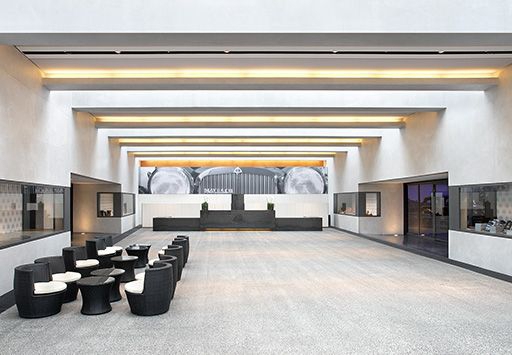
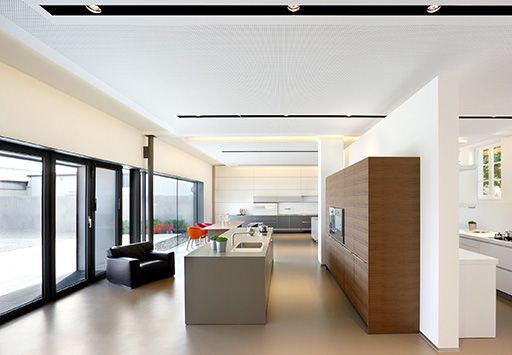
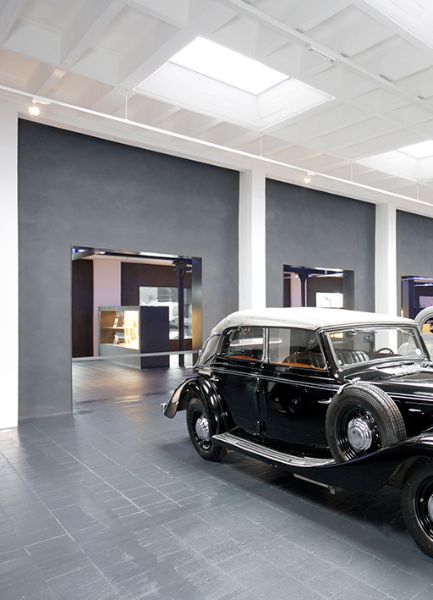
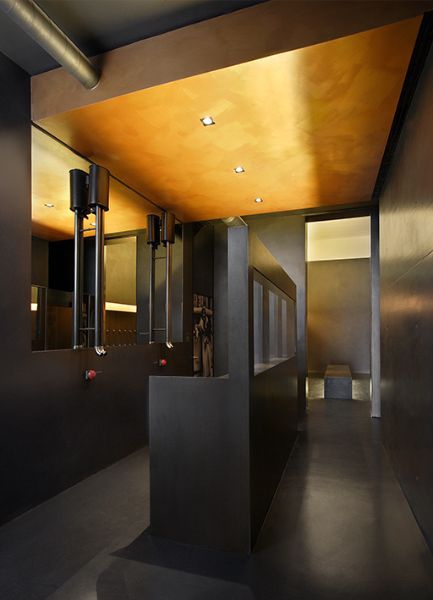
the new foyer unites the group of buildings by acting as a platform for central development. it has been intentionally made of original concrete on the visible facade to contrast with historical elements. shop windows and passages seem to be engraved with sharp corners on flat concrete surfaces. former production areas have succeeded in preserving their vibrant spatial character and, despite this, the new technique ensures their optimal performance in their new role of modern exhibition halls for period cars and for motoring history. openings between old and new create new overall visions and communication between all museum areas. the small range of new materials used allows to adopt a discrete expressive language that is, however, confident concerning recent architectural interventions and for interior design. the floor with its old asphalt tiles has been preserved, and traces of wear left by past use have also been intentionally preserved. the internal courtyard has been coated with an asphalt layer, besides the theme of the car, to adjust to all this. the steel sheet bears evidence of the building's industrial past and design in the form of corner frames, new openings and new landscapes in the historical facades and in the walls. the play of natural and artificial light creates interesting spatial experiments in the museum area. dark surfaces that have been skilfully fitted and crafted with the application of graphite from Bavarian forests form the ideal backdrop for the bright chromed shine of period items. the furniture and exhibition windows that are part of the general design, convey information while, concurrently, flooding the rooms with light.
pictures portraying the past of the city of neumarkt i.d.opf., the exhibition and , obviously, the maybach cars are not placed within frames but they are, instead, used as large surfaces that are installed on the internal walls of all museum areas. window panes are also used in this framework to transmit information within exhibition areas, which thus exploit day light while ensuring that concentration on displayed items is not distracted.



scroll


 Page loaded in: 0.078 - Powered by Simplit CMS